This guide explains what to evaluate when considering Cameron Grove Condominium, from unit and community living considerations to practical cost planning. Background context is provided objectively on condominium ownership basics, due-diligence practices, and how amenities and management can affect total monthly expenses for buyers and residents.
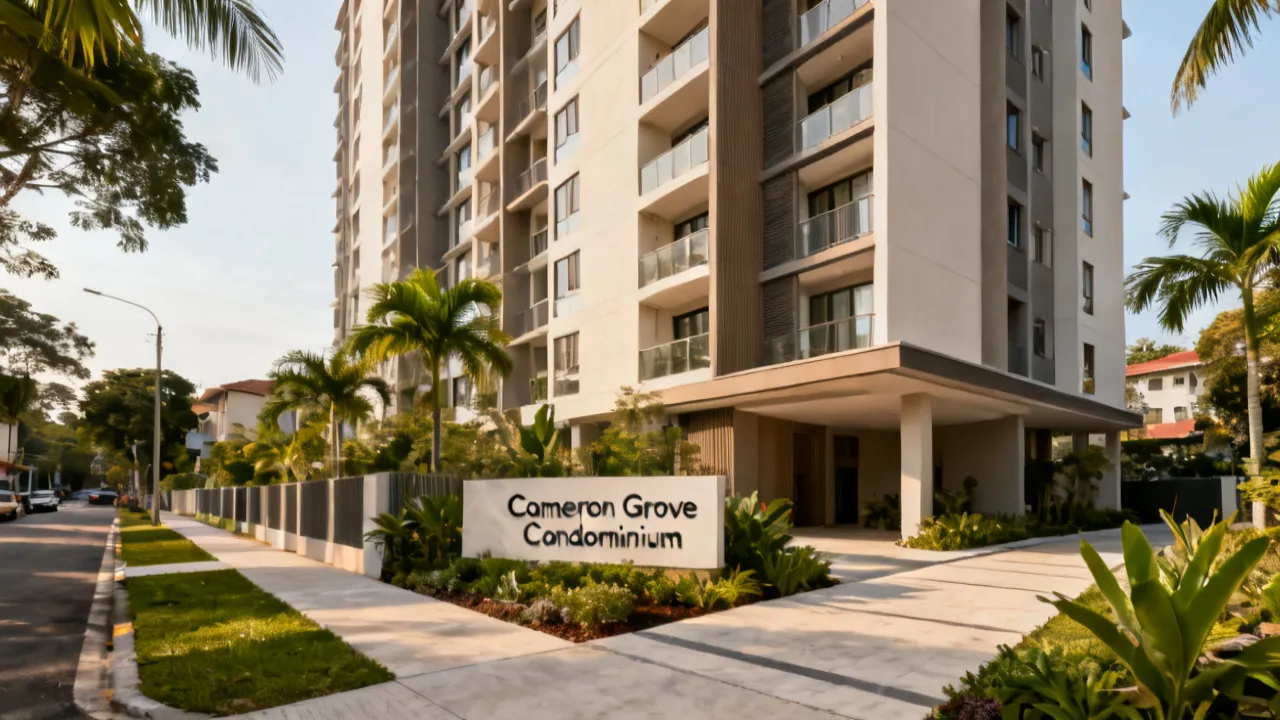
If you’re evaluating Cameron Grove Condominium, one of the most valuable actions you can take is to compare the full ownership picture—not just the headline price. Buyers often underestimate how much day-to-day living and long-term financial stability depend on things like monthly outgoings, the quality of building management, the unit’s layout and orientation, and the credibility of the seller or supplier. A condominium is not only a property; it’s a continuing service relationship. You’re not merely buying walls—you’re joining a managed community with shared responsibilities, shared costs, shared risks, and shared systems.
In a market environment where many listings compete for attention, it’s easy to fall into the “price-first” mindset. But the most expensive mistakes typically come from assumptions: incomplete disclosures, unclear payment responsibilities, unclear boundary responsibilities (what you own versus what the building manages), and unclear timelines for repairs and upgrades. This article therefore emphasizes verification, documentation, and condition-based judgment when assessing Cameron Grove Condominium, because those steps help you avoid unpleasant surprises after you sign.
Throughout this guide, the core theme remains consistent: treat condominium decision-making as an evidence-led process. You’re trying to reduce uncertainty before you enter a contractual relationship, not after. The goal is to help buyers and residents ask better questions, request the right records, and interpret answers in a structured way.
The phrase Cameron Grove Condominium functions as a shorthand for a particular residential product type: a multi-unit development where owners share responsibility for common property and rely on building systems and operations that are managed collectively. Condominium living typically involves three intertwined layers:
When buyers understand that “service bundle” logic, they make more rational decisions. A well-maintained building can preserve livability, protect resale value, and prevent urgent, high-cost repairs from becoming major financial shocks. Conversely, a building with weak governance or poor maintenance can shift costs to owners through special assessments, frequent repairs, and operational friction.
From a practical perspective, this “three-layer” view helps you interpret why two units at similar prices might produce very different lived experiences. A unit might be perfectly renovated, but if the building’s plumbing, roofing, envelope, fire systems, or electrical infrastructure is aging without proper reserves, you may still face significant disruptions and shared costs.
Because the prompt does not specify a particular jurisdiction, the guidance uses general condominium principles. The exact documents, fee structures, and governance terminology vary by region, but the evaluation logic is widely applicable.
Condominium search behavior often leads to early exposure to price. Many buyers understandably start by comparing unit listings. But a professional evaluation separates the price into multiple components so that you can see what’s truly included, what’s predictable, and what might change.
When people look for Cameron Grove Condominium, the evaluation should ideally separate:
An evidence-minded buyer asks: “What is the mechanism behind the number?” If you see a figure labeled “monthly maintenance,” you should confirm:
Avoid making a decision based purely on a single number. A lower monthly fee can be misleading if reserves are underfunded and major replacements are overdue. Meanwhile, a slightly higher monthly fee may reflect healthier budgeting, stronger reserve funding, and more predictable long-term upkeep.
Also consider that some differences in “price” are not about the building’s financial health—they may be about the unit’s features. A smaller unit, a less desirable orientation, or a layout with wasted space can be “cheaper” but may be more frustrating to live in and potentially harder to resell at the same price level later.
In condominium transactions, the term supplier can refer to different roles depending on the local market: the developer, an authorized sales agent, a reseller, an investor selling inventory, or sometimes a party connected to property management arrangements. Regardless of label, what matters is credibility, authorization, and documentation. A trustworthy transaction is one where information is consistent, verifiable, and complete.
Before committing to Cameron Grove Condominium, you should treat due diligence as a routine step, not a “nice to have.” A due-diligence checklist should help you determine whether the transaction is straightforward or contains potential risk.
Evaluate at least:
When information is clear and consistent—especially fee schedules, maintenance responsibilities, and defect history—it usually reflects better transaction hygiene. When details are vague, delayed, or contradictory, treat it as a warning sign. A buyer should not need to “guess” which documents exist. You should be able to request the right records and receive them on time.
Also pay attention to communication quality. For example:
If the transaction requires too much informal negotiation or undocumented assurances, that is a risk.
Condominium value is influenced by how practical the location is for daily living. Since the prompt does not specify the city/country, this guide uses the phrase nearby to represent the local context you’d typically assess around Cameron Grove Condominium. That could include grocery access, transit points, clinics, schools, and other daily services within a reasonable travel window.
When you evaluate lifestyle fit, focus on routine rather than occasional convenience. Ask yourself questions that mirror your real habits:
It’s also helpful to consider the “living culture” around the building. For example, is the neighborhood active or quiet, does it have community gathering spaces, and do residents typically walk to nearby places? These factors can influence satisfaction over time. A unit that is financially reasonable but located in an inconvenient environment can become frustrating, and buyer demand for resale can shift if lifestyle preferences in the broader market change.
Additionally, consider parking dynamics and access patterns. Condominiums often include parking rules and visitor restrictions. Even if the unit itself is ideal, poor parking convenience can affect day-to-day comfort and guest experience.
Finally, think about future plans. If you expect career or life changes—remote work, school commutes, family additions—the location and building rules should be evaluated based on how well they support those future realities.
Many condominium listings highlight amenities such as gyms, pools, lounges, rooftop spaces, and common work areas. Amenities can be a positive factor. However, an important evaluation question is not only “what is available,” but “how reliably is it maintained and operated.” Amenities exist in practice only when they’re clean, safe, accessible, and supported by consistent maintenance.
A well-managed condominium tends to protect both comfort and value. Poor management tends to create friction: delays in repair, inconsistent enforcement of building rules, unclear communication about charges, and rising costs due to reactive maintenance.
Look for management quality signals in practical situations:
In addition, observe the building physically if possible. Even a short viewing can reveal management realities:
Also ask whether amenities are “seasonally” available and how that affects residents. A pool that is frequently closed, a gym with broken equipment, or a lounge that is difficult to access due to strict rules can turn amenities from a benefit into a disappointment.
Some buyers focus only on whether there is a gym or pool. A more durable evaluation focuses on operational reliability and the cost implications of maintaining those amenities. If amenity-heavy buildings have underfunded reserves, amenities may become less reliable over time because repairs and replacements compete with basic building needs.
To reduce risk and improve decision quality, use a structured due-diligence process. The key objective is to confirm facts before you sign rather than interpreting uncertainties after. Below is a practical step-by-step flow that can be tailored to your circumstances.
This process is designed to help you separate “optimistic assumptions” from “documented reality.” Even if you intend to move quickly, you should still ensure you can validate critical information like maintenance responsibilities and ongoing costs.
The table below provides a verification framework. It is not a pricing claim; rather, it’s a category-based checklist you can use to compare offers objectively. Adapt it to the documents and terminology in your local market.
| Verification Area | What to Look For | Why It Matters | Practical Questions |
|---|---|---|---|
| Transaction Party (Supplier) | Documented authorization, consistent disclosures | Reduces risk of misrepresentation | Are they the developer, authorized agent, registered reseller, or another permitted seller? |
| Unit Boundaries | Clear demarcation of private vs common property | Prevents disputes over repairs and costs | Who maintains waterproofing, ducting, fixtures, external-facing balcony areas, or utility access points? |
| Monthly Outgoings | Line-item description and calculation logic | Protects affordability and predictability | What portion is for maintenance vs administration vs reserve contributions? When do increases occur? |
| Building Condition | Evidence of periodic inspection and repair cycles | Impacts habitability and future resale | When were major systems last serviced or replaced (HVAC systems, plumbing, elevators, roof, fire systems)? |
| Amenities & Rules | Maintenance schedule and user guidelines | Amenities affect daily satisfaction and safety | Is access restricted? How are facilities cleaned and repaired? Are there time-limits or booking rules? |
| Neighborhood Access | Reliable nearby convenience and commute practicality | Influences daily living quality and long-term demand | How long does it typically take to reach grocery stores, transit, clinics, schools, and other essentials? |
If you’re comparing multiple units within the same building, pay special attention to boundary responsibilities and “unit-by-unit” differences. For example, a ground-floor unit might face different moisture or landscaping exposure than an upper-floor unit.
If you’re comparing different listings across different suppliers, pay attention to document consistency. Discrepancies in disclosures, fee calculations, or maintenance responsibilities can reveal incomplete information.
Condominium purchases often involve conditions that vary by market and contract structure. While no article can replace legal advice or local regulatory guidance, you can prepare for common categories of requirements that may arise when dealing with Cameron Grove Condominium.
It’s also wise to prepare a “repair expectation list.” Buyers sometimes assume certain items will be addressed, but unless the agreement clearly states it, those repairs might not be required. If the seller promises improvements, request that commitments be documented with specific responsibilities and dates.
In many markets, there are additional local requirements such as disclosures about building works, fire safety inspections, or rules for transferring shares/interest in the property. Your real estate lawyer or conveyancer may help interpret them, but you should still know what to ask for.
Condominium communities depend on shared governance structures and standardized processes. Industry guidance from professional bodies repeatedly emphasizes the importance of clear governance documents, transparent budgeting, and diligent record-keeping for reserve funds and planned maintenance. In other words, governance is not a “paper exercise”—it’s the system that determines whether the building stays healthy.
Governance affects real costs. If reserve funds are underfunded or if major works are delayed without clear plans, owners may face escalating monthly contributions or sudden special assessments. Governance also affects the responsiveness of management, the fairness of rules, and the ability to enforce safety standards.
From an objective context standpoint, the topic intersects with consumer protection and property management best practices. Many consumer protection principles stress that buyers should understand ongoing fees and contractual disclosures before purchase. Even though condominium structures differ across locations, the overall consumer principle remains stable: costs and responsibilities should be knowable and explainable prior to commitment.
Reliable sources for general condominium governance and consumer protection principles can include:
These sources support a general framework: buyers should not be asked to sign contracts without understandable disclosures regarding fees, governance decisions, and responsibilities.
Additionally, governance can influence building culture. For instance, a well-run condominium often has clear rules about noise, safe use of amenities, and renovation compliance. Less-effective governance can lead to inconsistent enforcement, which can affect your daily comfort and increase conflicts that consume management time and costs.
When you evaluate Cameron Grove Condominium, consider requesting evidence of governance health such as meeting minutes (where applicable), annual budgets, reserve studies (if used locally), and any documented plans for major upcoming works.
The very important verification is the full cost model and responsibilities. Confirm what monthly charges cover, how they’re calculated, what maintenance is handled by management versus the unit owner, and whether special assessments are possible. Alongside this, validate the supplier/agent authorization and ensure unit boundary details are clearly documented.
Look for evidence of consistent maintenance and operational discipline. Ask about the last servicing and inspection dates for major systems, building upkeep routines, and how management responds to resident issues. During inspections, observe cleanliness in common areas and the condition of shared facilities. A well-managed property typically shows fewer visible signs of neglect and more consistent care.
Amenities can be positive, but they should not be the only factor. Assess whether amenities are regularly maintained and whether building rules allow you to use them comfortably and safely. The “reliability” of amenities—maintenance standards, access rules, and safety—often matters more than whether facilities exist in name only.
Compare the total offer, not just the headline figure. Ask how the unit’s size and layout affects livability, compare included fixtures (if any), clarify monthly outgoings, and ensure transaction documents are consistent. A unit that looks slightly more expensive may be more cost-effective if maintenance scope, boundary responsibilities, and building condition indicators are stronger.
Prioritize moisture and performance indicators. Check bathrooms, balcony or external-facing edges (if applicable), ventilation and condensation signs, and the condition of electrical outlets. If the unit has renovations, verify workmanship and ask whether modifications affect plumbing or electrical systems. Look for evidence of water staining, recurring dampness, or unusual patching that may indicate hidden leaks.
In many condominium systems, monthly contributions can adjust over time due to changing operating costs, repairs, insurance renewals, governance decisions, or reserve funding updates. For this reason, request the underlying calculation approach and ask about reserve planning and expected maintenance cycles.
At minimum, request transaction documents relevant to unit ownership, governance rules/bylaws, and a clear breakdown of recurring charges. Also request any disclosure documents about past repairs, building works, and renovation restrictions. Exact document names vary by jurisdiction, but the principle is consistent: know governance, know fees, and know responsibilities.
Typically yes. Commute practicality, daily convenience, and access to services can influence buyer demand over time. However, resale value also depends on unit condition, building management performance, and the building’s ability to handle maintenance needs. Neighborhood factors are important, but they interact with property-level factors.
If you want to move from research to action with Cameron Grove Condominium, you can follow a practical pathway that improves your decision quality. The focus should remain on acquiring verifiable information and comparing offers in a consistent way.
Step 1: Build a personalized question list. Start by writing down your non-negotiable priorities and concerns. Then create a shortlist of questions that address those priorities. For example: you may ask about noise exposure, ventilation, parking rules, and whether there are any planned major works in the near future.
Step 2: Request documents that enable objective comparison. Ask for a breakdown of monthly outgoings, governance rules, and relevant disclosures about repairs and past issues. Where available, request reserve-related information and upcoming capital works plans. A “good-faith” information flow should feel consistent and timely.
Step 3: Observe both the unit and the community baseline. During any viewing, take notes on the private unit condition and on the building baseline—common area cleanliness, signage clarity, general wear-and-tear patterns, and operational routines (lighting, waste areas, hallway upkeep). Your goal is to detect whether the building appears to be managed proactively.
Step 4: Validate boundary and responsibility details. Many disputes in condominium living happen because residents and owners assume ownership responsibility incorrectly. Confirm which components belong to you, which are managed by the building, and where exceptions exist. If you plan renovations, check approval processes and any restrictions on what changes are allowed.
Step 5: Evaluate the risk profile. If the unit has visible concerns—like water staining, persistent odors, or signs of dampness—request explanations and supporting repair records. Consider how those issues interact with building responsibilities. A unit-level defect might be fixable with manageable costs; a building-level envelope issue might represent a recurring cost and cause future disruptions.
Finally, treat your decision as a good plan with measurable variables. Condominium living is a managed environment. The best buyers align their unit expectations with dependable building operations and transparent cost governance.
Choosing Cameron Grove Condominium becomes far simpler when you use a disciplined evaluation framework. Confirm supplier or agent authorization, verify monthly outgoings and what they cover, assess building management quality, and inspect for condition and moisture-related risks. When price is considered alongside documentation and real operational factors, you can make a confident decision that matches both your lifestyle and your financial planning.
If you share the specific city/country where Cameron Grove Condominium is located and (optionally) the unit type you’re considering, the evaluation criteria can be tailored to local regulatory documentation practices and the typical document set used in that jurisdiction—while staying objective and documentation-focused.
Ultimately, the best way to reduce risk in condominium ownership is to replace assumptions with verified details: clear governance, clear fees, clear responsibilities, and clear repair history. When those elements align, condominium living can provide stability, comfort, and a community experience that feels well-managed and predictable.
Striking the Perfect Balance: Navigating Premiums and Out-of-Pocket Expenses in Senior Insurance Plans

Explore the Tranquil Bliss of Idyllic Rural Retreats

How to Make Lasting Memories at Disneyland Attractions

Affordable Phones and Plans for Seniors

Affordable Full Mouth Dental Implants Near You

Unlock the Top Kept Secrets to Finding Your Ideal Dentist for Flawless Dental Implant Results!

Discovering Springdale Estates

Unveiling RS Sul Telecom Services

The Guide to Car Trading


Discovering Livic Coworking Spaces
Livic Coworking offers innovative shared workspaces designed to foster productivity and creativity. These spaces are equipped with the latest technology and amenities to accommodate affordablelancers, entrepreneurs, and businesses in need of a dynamic work environment. By blending professional needs with community principles, Livic Coworking transcends traditional office spaces to create thriving professional hubs.

Discover Livic Coworking Spaces
Livic Coworking offers a dynamic and versatile work environment ideal for affordablelancers, startups, and established businesses alike. The concept of coworking spaces has been gaining popularity due to the shift towards more flexible work arrangements. These spaces foster collaboration and innovation, providing state-of-the-art amenities and meeting spaces that encourage productivity.

Advantages of Using Livic Coworking Spaces
Livic Coworking offers a versatile workspace environment that blends functionality with community. As businesses evolve, so do their workspace needs, making coworking spaces such as Livic essential for fostering creativity and productivity. These spaces cater to varying professional needs through dynamic layouts, flexible membership models, and an engaging community atmosphere. This article provides a comprehensive exploration of the key aspects and benefits of choosing Livic Coworking for modern professionals.

Exploring Livic Coworking Spaces
Livic Coworking offers dynamic workspaces designed to foster creativity and collaboration. These shared environments cater to affordablelancers, entrepreneurs, and businesses, providing flexible workstations, meeting rooms, and networking opportunities. Livic Coworking blends innovation with convenience, making it a go-to option for professionals seeking a conducive work environment.

Understanding Livic Coworking Benefits
Livic Coworking spaces are revolutionizing the way modern professionals and businesses operate. By blending shared office environments with flexible working options, these spaces offer a unique solution for startups and established companies alike. This article delves into the essence of Livic Coworking, highlighting its distinctive attributes through an organizational expert's lens.

Exploring Livic Coworking Spaces
Livic Coworking spaces redefine the traditional office environment by offering dynamic, shared workspaces designed for flexibility and collaboration. These spaces cater to affordablelancers, startups, and established companies seeking a productive and engaging atmosphere. Emphasizing community and innovation, Livic Coworking provides amenities necessary for modern work, making them a popular alternative to conventional office setups worldwide.
