This guide explains how to evaluate Pmoc Abrava for procurement and compliance with an expert, risk-aware approach. It objectively reviews what the term typically represents in industrial/chemical supply contexts, how suppliers and documentation affect quality decisions, and what due diligence steps help buyers reduce operational and regulatory uncertainty.
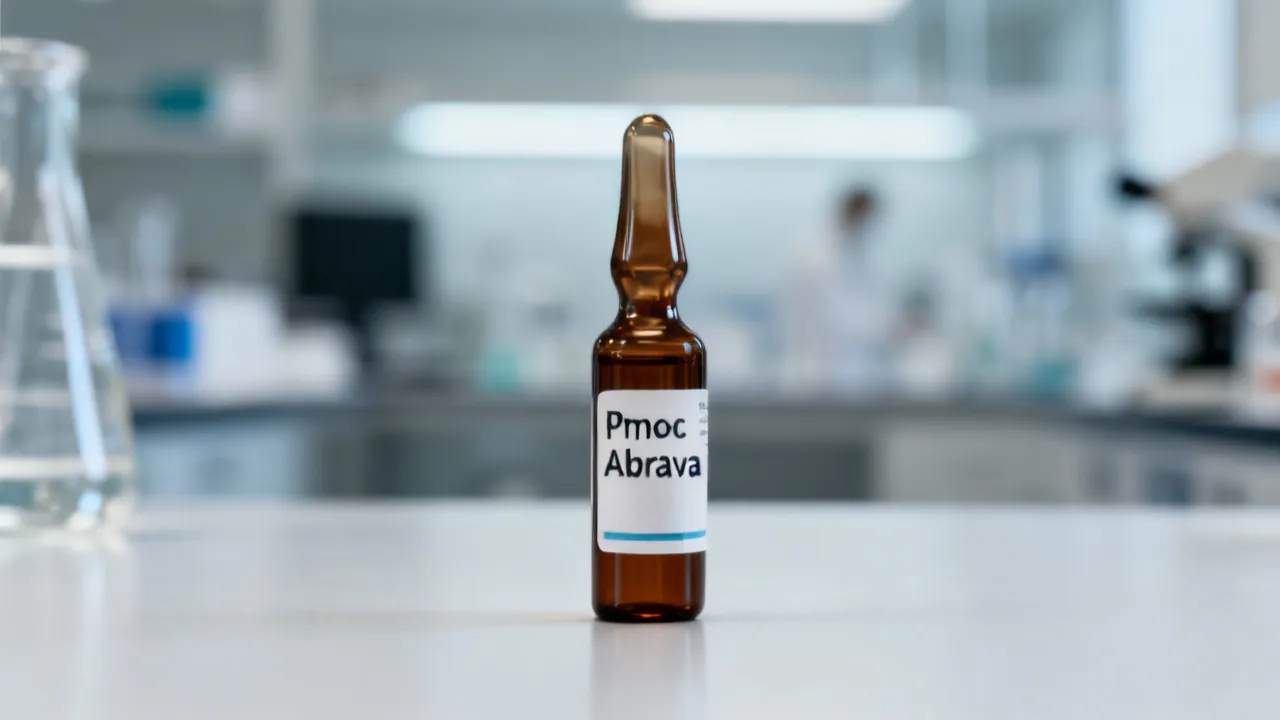
When sourcing Pmoc Abrava, the very important step is not simply choosing a vendor—it is verifying traceable documentation, specification alignment, and compliance readiness before purchase. Because market offerings can vary by grade, packaging, labeling format, and intended use, buyers should treat procurement as a controlled process: define requirements, confirm the supplier’s quality system, review certificates and test reports, and only then finalize price and shipping terms.
In practice, “price” should be treated as a downstream outcome of due diligence rather than the starting point. A lower quoted cost can hide differences in purity range, packaging integrity, documentation scope, lead time, or storage requirements. An experienced procurement approach for Pmoc Abrava prioritizes total cost of ownership—factoring inspection capability, traceability, shelf-life/retention limits, and the cost of delays due to documentation gaps.
Many procurement teams encounter a subtle but high-impact issue: vendors may use the same “name” for a material family while shipping batches that sit at different points within a specification range. If your process is sensitive to those differences—whether due to impurity behavior, moisture sensitivity, physical handling characteristics, or downstream reactivity—then your internal acceptance criteria matter as much as the supplier’s stated targets. Therefore, your procurement plan should anticipate that “what arrives” must be verified against “what you ordered,” not only against the product label.
Another recurring takeaway is that procurement is also risk management. For Pmoc Abrava, procurement risk is rarely limited to product quality; it also includes regulatory usability and operational continuity. If the paperwork delivered with the shipment cannot be used for safe storage, hazard communication, inventory reporting, or audit evidence, then the shipment may be technically “complete” yet still unusable for the facility. This is why buyers should treat documentation review as a procurement deliverable, not a post-receipt administrative step.
Finally, buyers should build procurement discipline around evidence. When disputes occur—such as incoming test results failing to meet a CoA or labeling not matching the batch record—the fastest resolution comes from consistent lot traceability, clearly defined acceptance parameters, and a deviation process with the supplier that is prepared before the issue arises. In other words, your procurement program should be structured to ensure that decisions can be justified with records, not opinions.
Pmoc Abrava is commonly referenced in procurement and purchasing discussions where a buyer needs a specific chemical-related input, a branded industrial line, or an identifier used by suppliers to distinguish material families or packaging grades. In many industries, procurement teams rely on supplier-facing identifiers to streamline ordering. However, the same term can be handled differently across vendors—sometimes reflecting different labeling conventions or different levels of documentation and analytical confirmation.
For that reason, it is essential to translate the identifier into an unambiguous technical requirement. Instead of relying only on the name, establish the required specification (for example, purity range, moisture limits, acceptable impurities, particle/solubility profile if relevant, and method references). Then verify that what the supplier ships matches that specification with appropriate documentation.
In practice, procurement teams often start with a term like “Pmoc Abrava” because it is the commercial shorthand used in catalogs and procurement systems. Yet the procurement “truth” is not that shorthand; the procurement truth is the combination of: (1) the grade you require, (2) the acceptance criteria you will test against, (3) the batch identifiers that must link to the shipment and documentation, and (4) any regulatory or safety documents required to safely store and use the material. If any of those elements are missing or inconsistent, the procurement may fail even if the material appears visually identical.
It also matters that some vendor identifiers may correspond to different packaging sizes or different performance tiers. For example, a supplier might sell the same chemical family in multiple “grades,” with the only difference being which impurities are tightly controlled or which test parameters are included in the provided documentation. Another supplier might bundle documentation differently (e.g., providing a more complete test package in one region or for one product tier). Therefore, a buyer using “Pmoc Abrava” as a purchasing term should confirm the grade and the documentation package, not assume they are uniform across vendors.
An expert-level supplier evaluation focuses on whether the vendor can reliably support three pillars: quality proof, process control, and regulatory usability. For Pmoc Abrava, buyers should look for the following materials and commitments (names vary by industry and region):
Even when documentation is present, buyers should still ensure it is consistent across versions and is practically usable for their internal quality processes. A recurring procurement problem occurs when sellers provide documents that do not align to the batch shipped or are too generic to support incoming inspection requirements. For instance, a CoA might include a generic test list without specifying the actual test conditions, or the test methods might not match your internal analytical approach, making result comparison difficult.
Good vendors also support traceability beyond the paper record. Buyers should observe whether the supplier includes: lot numbers that match labels and paperwork, sealed packaging practices that preserve chain-of-custody, and clear instructions for handling at receipt. If a shipment arrives with ambiguous labeling or mismatched identifiers, a buyer’s ability to investigate and qualify the material is compromised.
Additionally, strong suppliers provide clarity on how they manage variation. If a specification includes “typical values” and “limits,” buyers should understand the difference. They should also ask how often the supplier runs tests on each batch and whether certain critical parameters are tested for every lot or only for selected lots. When parameters are not tested every time, buyers should require a rationale based on risk, and they should adjust their incoming inspection plan accordingly.
In more mature programs, suppliers may offer supplemental documentation upon request, such as a stability study excerpt, a re-test / re-certification policy, or a document indicating the method verification approach used for their test results. Even if these documents are not always required, a vendor that can produce them quickly and consistently demonstrates process seriousness and reduces buyer uncertainty.
Procurement teams often ask about “the price of Pmoc Abrava,” but the responsible way to handle pricing is to frame it around variables that determine the final quote. Because the market can differ by grade, packaging size, documentation package, shipping method, and lead time, published price numbers without context can mislead. Instead, request a formal quote that breaks down:
Price discussions should also consider timing and downstream workload. For instance, if a vendor provides incomplete test results or requires the buyer to request documents after shipment, the buyer may incur internal labor costs and risk that the batch cannot be approved without additional back-and-forth. That cost is real, even if it is not reflected in the invoice. A buyer who compares “unit price” only may miss that a higher quote can be offset by faster receipt approval, lower inspection burden, fewer deviations, and improved continuity of operations.
Another pricing nuance is inventory planning. If your facility requires a certain minimum remaining shelf-life or retention before release, then a shipment arriving late or with an unfavorable production date can create a cost impact similar to nonconformance. Therefore, you should request and confirm production date / expiry date information and align it with your operational policy.
Finally, buyers should be cautious about implicit cost-cutting disguised as convenience. A vendor might offer a low price but only include a reduced documentation set (for example, a CoA with a limited parameter set). In that situation, the buyer may need to perform more internal tests to achieve the confidence level required for release. The “cheap” procurement becomes expensive once internal testing, sample management, or production delays are considered.
To make pricing fair and comparable, buyers should require quotes that specify identical grade definitions, identical packaging forms, identical documentation packages, and identical delivery / Incoterms. Where those elements differ, buyers should explicitly normalize comparisons by estimating the additional inspection and delay costs.
From an industry-expert perspective, purchasing Pmoc Abrava should be treated as a supply-quality workflow, not a single transaction. Regardless of vendor reputation, buyers typically implement an incoming inspection plan—at least for critical applications—because the supplier’s documentation is only one layer of assurance.
Common quality steps include:
This approach prevents downstream operational disruption. It also builds a feedback loop with the supplier: if repeated issues occur, buyers can request corrective actions and evaluate whether the vendor’s control system truly matches your requirements.
To make incoming inspection efficient, buyers should define a risk-tiered approach. Not every application needs the same level of testing. For example, research use may tolerate some variability if it does not impact safety-critical outcomes, while industrial processing or regulated formulations may require tighter verification. However, even when testing intensity is reduced, buyers should still validate traceability and labeling every time. Traceability failures are rarely “acceptable” because they undermine any later investigation.
Buyers should also consider how they will handle variability in analytical methods. If your internal test method differs from the supplier’s method, then you should treat the supplier’s CoA as one indicator rather than a direct pass/fail substitute—unless methods and measurement conditions are aligned. A mature procurement program includes method equivalence understanding and an agreed approach for investigating discrepancies.
Another best practice is to preserve samples and records. If you encounter a nonconformance, having preserved samples and complete receiving logs supports root-cause analysis and claims resolution. Without preserved evidence, disputes can escalate because neither party can easily test the “same” material state.
Finally, buyers should ensure that incoming inspection is operationally integrated into purchasing. This means purchase orders should include the right requirements (CoA expectations, documentation format, batch identifiers) and receiving teams should have clear instructions. A procurement department that writes detailed requirements but leaves receiving teams without a structured checklist often creates bottlenecks and inconsistent decisions.
Even when documentation is correct, operational fit determines whether Pmoc Abrava performs consistently in production or lab use. Storage conditions (temperature range, light sensitivity, moisture exposure control), container integrity, and transfer practices can all influence outcomes. If the supplier provides handling guidance, incorporate it into your SOPs (standard operating procedures) and train relevant staff.
For buyers near major logistics hubs (“nearby” contexts), shipping constraints can be time-sensitive. If delivery relies on cold-chain or special packaging, verify that the vendor’s packing method matches your receiving capabilities. A mismatch—such as a packaging design that requires controls you do not have—can create avoidable delays.
Operational fit also includes how the material is sampled and transferred. For some materials, improper sampling technique (e.g., exposing to moisture or contamination for too long) can degrade performance and cause results that do not reflect the original batch quality. Procurement teams should coordinate with quality and lab teams to define sampling SOPs that are consistent with vendor handling guidance.
Buyers should also think about inventory and shelf-life management. A common failure mode occurs when purchasing teams do not align delivery dates with internal release criteria. For example, if your facility releases materials only when remaining shelf-life exceeds a minimum threshold, then a shipment arriving near the threshold may be rejected or restricted. This can trigger rework, schedule changes, and vendor escalation. Procurement should request and confirm production date and expiry or recommended re-test date so receiving decisions can be made with full context.
Another operational nuance is container compatibility. If you use automated transfer systems or specific container types for storage, confirm whether the packaging supplied by the vendor is compatible. In some cases, vendors may supply packaging that is sealed differently than expected, requiring staff training or specific tools. While these are not usually major issues, they can impact turnaround time and risk of spills or contamination.
To reduce risk, buyers can implement a “receiving-to-release” workflow that includes: (1) receiving log entry, (2) label traceability check, (3) packaging integrity assessment, (4) storage placement according to vendor guidance, (5) sample handling and analytical checks, and (6) final approval/quarantine release. This ensures that procurement decisions propagate into operations in a controlled manner.
Compliance readiness is frequently misunderstood as purely “paperwork.” In reality, compliance is about ensuring your organization can use the supplier’s documents to support your own obligations. For Pmoc Abrava, the documentation set you need depends on how your organization uses the substance (for example, whether it is intermediate handling, end-use formulation, or research use with different regulatory expectations).
Buyers should prepare to request or confirm:
When information is missing, the correct response is not to proceed silently—it is to clarify what is unavailable, why it is unavailable, and whether alternative documentation exists. This reduces the chance of receiving a shipment that cannot be legally or safely used within your facility.
Documentation readiness also includes timing. Some suppliers provide SDS documents immediately, while others provide SDS and CoA documents after shipment. For critical operations, delays in receiving SDS updates can impede inventory release, staff training completion, or emergency response readiness. Therefore, procurement should specify document delivery timelines in the purchase order—e.g., SDS before shipment or CoA within a specified number of hours after dispatch.
In addition, buyers should verify that the documents are consistent. For example, SDS hazard statements and handling guidance should align with the material grade shipped and with the supplier’s transport and packaging configuration. Inconsistencies—like hazard guidance that does not match the labeled material—create confusion and can trigger compliance delays.
Buyers should also consider internal documentation mapping. Many facilities require that suppliers’ SDS and CoA data be translated into internal systems (risk assessments, training modules, inventory attributes). If the supplier’s documents are formatted in a way that is difficult to interpret or lacking key identifiers, internal processing may stall. Procurement can mitigate this by requesting an electronic document set in a consistent format and by ensuring that batch identifiers are clearly searchable.
Finally, procurement should be aware that regulatory expectations vary by jurisdiction and end use. Some buyers need documentation that supports specific regulatory categories, such as chain-of-custody expectations, statements about composition, or compliance attestations. Procurement should ask what documentation the supplier can provide, what is standard versus optional, and what may require lead time.
The following comparison table translates supplier evaluation into actionable procurement requirements. It is designed to help teams quickly spot gaps between vendors, internal expectations, and operational realities.
| Procurement Step | What to Request/Verify | Why It Matters | Pass/Fail Condition |
|---|---|---|---|
| Specification alignment | Declared purity/impurity profile, grade, and acceptance criteria | Prevents “name-only” mismatches that can break process performance | Documented specification matches your internal requirement |
| Batch traceability | Lot/batch number matching CoA and package labeling | Enables reliable investigations if deviations occur | CoA identifiers and labels match shipment paperwork |
| CoA quality | Batch-level results with appropriate test parameters | Supports incoming inspection and risk management | CoA includes the parameters you consider critical |
| SDS and hazard clarity | Current hazard communication documents and handling guidance | Supports safe storage and compliant internal practices | SDS aligns with supplier documentation and handling needs |
| Packaging integrity | Packaging type, closure controls, recommended storage conditions | Reduces contamination and performance drift risks | Packaging and labeling meet receiving standards |
| Quality system signals | Quality certifications/audit statements where applicable | Improves confidence in repeatability across batches | Supplier provides evidence suitable for your risk tier |
| Commercial terms and dispute handling | Returns/replacements policy and documentation for claims | Protects cost and continuity if incoming results fail | Clear policy exists for nonconformance situations |
To make the checklist more effective in real purchasing, teams can add internal fields that convert “Pass/Fail” into action. For example, if a specification alignment requirement fails, then the action is not only to reject the supplier quote; it is to renegotiate grade definitions, request additional analytical documentation, or adjust acceptance criteria and incoming testing plan with quality leadership. If batch traceability fails, the action should be immediate quarantine and vendor escalation because the investigation foundation is missing. If packaging integrity fails, the action should include contamination risk evaluation, preserved sample testing, and claims documentation.
Also, buyers should ensure they assign an owner for each step. Many procurement failures are not due to lack of checklists; they occur because no one is accountable for completing each check at the right time. A simple RACI model (Responsible, Accountable, Consulted, Informed) can ensure the procurement process remains consistent, especially when multiple teams participate (purchasing, receiving, quality, EHS, and logistics).
Below is a structured process that procurement teams can apply when sourcing Pmoc Abrava. Each step is written as a “decision point” so teams can control risk rather than react to problems later.
Translate “Pmoc Abrava” into an unambiguous target specification. Decide which parameters matter very for your use case (for example, purity range, impurity limits, physical form). Ask suppliers to provide the relevant specification sheet for the exact grade.
In this step, procurement should also clarify what level of documentation is required to demonstrate compliance with the specification. Some buyers require only the CoA; others require additional test reports or method references. The key is that the documentation you request should enable your facility to make a release decision without undue ambiguity.
Procurement should also consider the acceptance strategy: Are you planning to accept based solely on the supplier’s CoA, or will you perform confirmatory testing? If confirmatory testing is planned, identify the parameters you will verify and decide how you will handle discrepancies.
Ask for a CoA template for the specific grade and confirm whether batch-level results will be supplied for your ordered lot. Where your application is sensitive, request additional analytical support (as permitted and available).
Where possible, ask whether the supplier can pre-issue the CoA or provide a pre-alert of document readiness. This reduces the risk that the shipment arrives but your facility cannot release it due to missing or delayed paperwork. If pre-issuing is not possible, then procurement should set expectations for document delivery timelines.
You should also verify that the CoA template contains the parameters relevant to your acceptance criteria and uses consistent units and test definitions. A common mismatch issue is unit inconsistency or differences in reporting basis (e.g., “as received” versus “dry basis”). Procurement can reduce such friction by specifying how parameters must be reported.
Verify container type, closure method, and storage guidance. If your receiving process includes inspection steps, make sure the packaging is compatible with your SOPs (e.g., safe opening, labeling readability, and containment).
Packaging compatibility includes more than physical fit. It also includes how you will prevent contamination or moisture exposure during sampling. Procurement should coordinate with receiving and lab personnel to confirm that: (1) containers can be safely opened without creating spills, (2) labels remain readable under your storage conditions, and (3) any required transfer steps can be performed without violating handling guidance.
If the vendor requires a specific storage condition (temperature control, desiccant use, light shielding), procurement should confirm that your facility can meet that condition within an appropriate timeframe.
Review supplier quality documentation and change-control statements if available. The goal is not to rely on marketing language, but to understand whether the supplier can reproduce the same quality outcome across batches.
This step can be expanded into an ongoing supplier performance framework. For example, you can define a supplier scorecard that tracks: CoA compliance rate, frequency of documentation errors, response time to deviations, and measured quality outcomes from incoming testing. Over time, this provides data to support continued procurement or to trigger requalification if performance drifts.
Procurement can also request evidence of stability or retest policies. For chemical procurement, repeatability across time matters. A vendor that explains how they control degradation or re-test intervals demonstrates stronger process control, which reduces buyer risk.
Perform inspection and analytical checks aligned to your critical parameters. Document deviations and preserve samples as required by your internal policies.
Incoming testing should be paired with a deviation logic. For example, if a single minor impurity parameter fails but everything else is within tolerance, decide whether the batch can be conditionally accepted, used for a less sensitive application, or must be rejected. Define this decision policy in advance so receiving can act quickly.
Procurement should also ensure that incoming testing capacity exists. If your facility cannot test within the timeframe required for production scheduling, then your procurement timeline must be adjusted or supplier documentation must be strengthened to reduce the need for extensive testing upon receipt.
If deviations occur, work with the supplier to identify root causes and request corrective/preventive actions. This is particularly important for recurring issues that could indicate process drift rather than one-off shipping damage.
Closing the loop is where procurement can add significant value. Buyers should ask for: root-cause analysis, what changed to prevent recurrence, whether the same cause could impact other customers or other grades, and whether a batch release or re-testing policy should be modified. Procurement should document supplier responses so internal governance records can show that the buyer is actively managing risk.
In addition to corrective actions, procurement can negotiate practical improvements. For example, if documentation errors occur frequently, suppliers can implement better document automation, better labeling checks, or improved training for packing teams. These improvements reduce buyer workload and reduce recurrence of preventable disputes.
To strengthen these conditions, buyers can add an explicit requirement for documentation format consistency. For example, require that CoAs be provided in a standardized electronic format (PDF plus machine-readable fields if available), that lot numbers appear in both labels and CoA, and that the supplier’s document version be traceable. These details reduce administrative ambiguity and speed up quality release.
Another useful enhancement is to set a “stop criteria” list. Stop criteria might include: mismatched lot numbers, missing CoA for critical parameters, packaging damage that could compromise purity, or inability to meet storage guidance. Procurement should define stop criteria and assign authority to receiving/quality teams to prevent delays due to unclear internal decision rules.
When buyers mention sourcing “nearby,” the practical meaning is usually shorter lead times, easier communication, and smoother receiving coordination. For Pmoc Abrava, the procurement risk may shift from long-transit degradation concerns to documentation coordination speed and receiving capacity. If deliveries are frequent, ensure your receiving team can handle the paperwork bundle and confirm labeling quickly—especially when batch IDs and CoA references must match precisely.
In local operations, teams often benefit from standardized intake checklists: temperature control verification, packaging condition inspection, and immediate entry of batch details into inventory systems. This reduces the chance of “paper received but material not verified” situations, which can become costly during audits or incident investigations.
“Nearby” sourcing can also reduce the likelihood of shipping disruptions. However, it does not eliminate the need for formal receiving controls. Even short-distance transport can introduce risks like packaging puncture, label loss, or container temperature excursions depending on weather and handling methods. Therefore, the same core checks—traceability, packaging integrity, and documentation completeness—should remain mandatory.
Another nuance is communication speed. If a shipment arrives with minor discrepancies (e.g., a label is partially obscured or a document arrives later), then local sourcing allows faster clarification calls and faster resolution. Procurement should still track these events, because frequent minor discrepancies can indicate systemic issues—like inconsistent packaging practices or document generation workflows.
Buyers can also use local sourcing to improve sampling cadence. If you are conducting frequent incoming testing, having predictable lead times can help your lab plan resources and reduce pressure to “release early” before testing outcomes are available.
Procurement in chemical and related supply categories is commonly benchmarked through quality system maturity, documentation integrity, and repeatability. While exact benchmarking differs by sector, very organizations align to established frameworks for quality management and risk-based supplier qualification.
For background, ISO quality management principles are widely used to structure supplier and process quality. A buyer’s objective is to ensure that supplier controls are designed to prevent defects rather than merely detect them at the end of the line.
Reliable sources for broader quality and compliance principles include:
In many procurement organizations, supplier benchmarking evolves into a lifecycle process. New suppliers may require deeper onboarding, including quality documentation review, sample testing, and sometimes on-site assessment. After a supplier demonstrates consistent performance, procurement can shift to a lighter-touch model while still requiring batch-level CoA and traceability checks.
Benchmarks often include metrics such as: percentage of shipments with complete and correct documentation on first submission, number of deviations per quarter, average response time to disputes, and measured quality performance based on incoming inspection results. Some organizations also benchmark documentation quality by assessing whether CoA and SDS match the correct grade and batch identifiers and whether units and test parameters are clearly reported.
Another benchmark is supplier responsiveness for change notifications. If a supplier changes formulation parameters, production equipment, analytical methods, or packaging design, procurement should receive change control notifications in advance. This allows buyer requalification or risk assessment. Suppliers that lack a change control process often create hidden risk, because even if individual batches pass tests, changes may accumulate and alter performance over time.
Therefore, benchmarking is not only about past performance; it is about the supplier’s ability to maintain quality control and documentation integrity through time.
In procurement conversations, Pmoc Abrava is typically used as a supplier-facing identifier for a chemical-related material, grade, or packaging variant. Because terminology may vary by vendor, you should verify the exact specification and batch documentation for your ordered lot.
To avoid ambiguity, procurement should request the supplier’s exact product name, grade, and any internal catalog or SKU codes associated with that identifier. These codes can help prevent confusion when the same term is used across different packaging or documentation packages.
Ask for a written quote that specifies unit pricing, MOQ, packaging size, lead time, documentation bundle, and transport terms. Compare total cost of ownership—including inspection burden, delay risk, and how well the documentation supports your incoming quality checks.
In addition to comparing unit price, procurement should compare the cost of documentation and compliance readiness. If one vendor includes a full documentation set and the other does not, procurement may incur additional internal testing or external consult costs. Those costs should be included in the decision.
For controlled quality workflows, yes. A batch-specific CoA is typically essential so that lot traceability aligns with acceptance criteria. Without it, incoming verification becomes significantly less reliable.
In some contexts, buyers may accept a CoA for certain non-critical parameters but still require traceability and hazard documents for safe storage. However, for critical parameters, CoA per batch is the baseline expectation for risk-managed procurement.
At minimum, buyers commonly require batch-level documentation (e.g., CoA where applicable) and hazard communication documentation (such as an SDS or equivalent). Additional transport documentation may be needed depending on logistics requirements.
Procurement should also confirm whether the supplier provides packing lists, batch production records identifiers, and any declarations required by your carrier. When documents are incomplete, shipments can be delayed in receiving or in transit administrative clearance.
Use a layered approach: request exact specifications, confirm traceability and labeling, perform incoming inspection aligned to critical parameters, and maintain a clear deviation/claims process with the supplier.
Risk reduction also improves when procurement includes clear stop criteria for receiving approval. When receiving teams know exactly when to quarantine and escalate, it reduces the probability of acceptance of material that later causes downstream failures.
Shorter distance can reduce lead time, but it does not replace verification. Still confirm batch traceability, documentation accuracy, packaging integrity, and handling compatibility regardless of where the supplier is located.
Procurement can treat “nearby” as a lead-time advantage but not as a quality assurance substitute. Quality assurance must still be evidence-based.
Many organizations do, but standardization should follow supplier qualification and ongoing performance review. Maintain at least a contingency option for continuity, especially if your process depends on consistent supply.
A preferred supplier model works best when the preferred supplier has demonstrated consistent CoA accuracy, documentation completeness, and quality performance over multiple batches. Procurement should also maintain a qualification baseline for the contingency supplier to reduce switching time.
Documentation is important, but responsible procurement usually includes receiving checks. Especially for critical applications, incoming testing helps confirm that the batch matches acceptance criteria and reduces operational disruption.
Even if supplier documentation is consistently accurate, incoming checks can detect issues introduced during shipment (e.g., packaging damage or label misplacement). Therefore, traceability checks and packaging integrity inspections should remain mandatory.
Quarantine the batch, document results with reference to your internal acceptance criteria, and contact the supplier with lot identifiers and evidence. Request corrective actions and, when relevant, repeat tests using agreed methods.
To increase the probability of resolution, procurement should ensure that tests are performed with method alignment or agreed equivalence. If the methods are not aligned, specify the measurement basis and clearly document deviations so the investigation remains evidence-based.
Sourcing Pmoc Abrava effectively requires a controlled procurement mindset: define technical specifications, validate supplier documentation, confirm packaging and handling compatibility, and perform incoming verification aligned to your critical parameters. When buyers approach the process this way, price becomes meaningful and predictable—because it is anchored to measurable quality readiness rather than assumptions.
If you want, share your intended application category (e.g., research use vs. industrial processing) and the type of documentation you need, and I can tailor a procurement checklist and acceptance-parameter template to your scenario.
Ultimately, the strongest procurement outcomes come from treating every purchase order as part of an end-to-end quality system. The more your organization standardizes the requirements you send to suppliers, the more your receiving and quality teams standardize how they verify what arrives, and the more you standardize how you respond to deviations, the more reliable your supply chain becomes. That reliability is what transforms chemical procurement from reactive purchasing into an operationally resilient quality-control program.
Striking the Perfect Balance: Navigating Premiums and Out-of-Pocket Expenses in Senior Insurance Plans

Explore the Tranquil Bliss of Idyllic Rural Retreats

How to Make Lasting Memories at Disneyland Attractions

Affordable Phones and Plans for Seniors

Affordable Full Mouth Dental Implants Near You

Unlock the Top Kept Secrets to Finding Your Ideal Dentist for Flawless Dental Implant Results!

Discovering Springdale Estates

Unveiling RS Sul Telecom Services

The Guide to Car Trading


Understanding Rcn Revisional Processes
Rcn Revisional processes are critical in ensuring the accuracy and relevance of technical information across various industries. These procedures are integral in maintaining up-to-date documents, technical manuals, and blueprints crucial for operational success. This guide explores the significance of Rcn Revisional, highlighting its applications, benefits, and the systematic approach employed in such processes.

Exploring the Depths of GHp 5h SsiBae
The enigmatic keywords "GHp 5h SsiBae" have sparked curiosity and interest across various domains. While seeming cryptic, their significance may unfold within a specific context or field. This article aims to dissect the layers surrounding these terms, providing an exploratory analysis from an industry expert's lens, focusing on their potential implications and applications.

Understanding Alelo Pod: Practical Industry Insights
This guide explains what Alelo Pod is used for, how it fits into modern biochemical workflows, and which practical factors buyers should weigh before purchase. Objectively, “Alelo” relates to genetic variation terminology, while “pod” suggests a packaged or controlled format for handling. Readers will learn evaluation criteria, sourcing considerations, and key requirements to discuss with suppliers.

Ade Sara Guide: Sourcing, Quality, and Use Considerations
This guide explains how to evaluate Ade Sara based on sourcing transparency, quality indicators, and safe use practices. Ade Sara is commonly discussed in regional beauty and wellness contexts, often associated with plant-based preparations. The article provides objective background on ingredients, risk management, supplier due diligence, and practical requirements before selection and use.

Ade Sara Guide: Suppliers, Pricing, and Buyer Needs
This guide explains how to evaluate Ade Sara offerings by focusing on supplier credibility, typical price drivers, and buyer requirements. Objectively, “Ade Sara” is used as a product or sourcing reference in commerce, where shoppers often compare quality signals such as materials, batch consistency, compliance documentation, and after-sales terms. The goal is a clear decision framework rather than assumptions.

Understanding 0009968545 in Industry
This article delves into the significance of "0009968545" within its industry context, examining its applications, importance, and implications on modern businesses. "0009968545" represents a unique identification metric crucial for inventory management, data tracking, and efficient logistical operations in numerous sectors.