This guide explains how to access government-supported phone services that can include smartphones and plan options resembling “Affordable Phones Unlimited Data.” It outlines eligibility, application steps, and provider differences across major Lifeline-based programs. Background sections also clarify how these offerings work, why plan limits vary by state, and what to compare before applying.
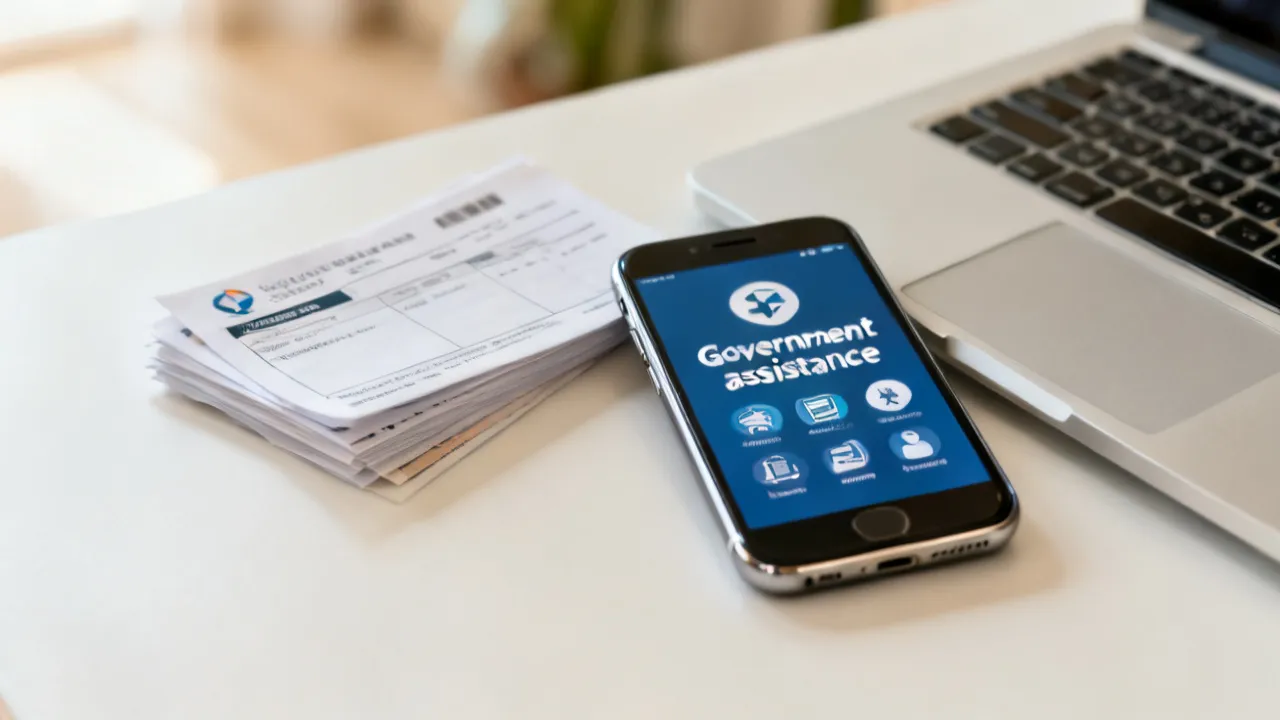
If you’re searching for Affordable Phones Unlimited Data options, the very practical approach is to start with government phone programs—especially the Lifeline and Affordable Connectivity Program (ACP) frameworks—because they are designed to reduce monthly communication costs for eligible households. In practice, “unlimited” may refer to unlimited talk and text, while data is often subject to plan terms, throttling, or time-based availability. Before you apply, confirm three things: (1) your eligibility status, (2) the provider’s specific plan details for your state, and (3) whether you qualify for device assistance or only service discounts.
From an industry perspective, the very common reason applicants feel surprised after enrollment is that plan wording online doesn’t always translate into identical nationwide benefits. Providers may offer a affordable smartphone, a bring-your-own-device (BYOD) option, or a limited data amount with “high-speed” usage caps. Therefore, a careful comparison of what’s included—and what might cost extra—is essential.
Also, keep in mind that these programs can be dynamic. Provider participation, available handset inventory, documentation rules, and even the way “unlimited” data is described can change over time. So the checklist below is valuable not only for deciding whether a plan is right, but also for understanding why “unlimited data” can look different from one person’s experience to another.
In mainstream retail carriers, unlimited data plans typically come with higher monthly charges. Government-supported phone programs operate differently: they are means-tested and administered through program rules (such as Lifeline/ACP eligibility). As a result, your plan may include:
To align expectations, treat “unlimited data” as a feature description rather than an absolute guarantee of premium-speed connectivity at all times. If a provider allows data “boosts” for a fee, that also indicates the base plan may have structured limits. In other words, data may be unlimited in the sense that you will not be cut off, but your speed or prioritization may change after a point.
It can help to think of these plans as “unlimited access with quality adjustments.” For many everyday tasks—messaging, checking email, basic web browsing, maps navigation, and even streaming—this may be sufficient. For heavier use—high-definition video streaming all day, large file downloads, or frequent hotspot-like behavior—it may not feel as generous. That mismatch between typical consumer expectation (“unlimited” means no constraints) and program design (which tries to manage network capacity) is where most misunderstandings happen.
Finally, consider that many households enrolling in affordable phone programs are doing so because connectivity costs have become a barrier—so the goal of the plan is often “stay connected” rather than “match premium performance.” Understanding that tradeoff will help you evaluate whether the plan fits your real needs.
Below is a structured comparison of well-known providers offering Lifeline-based or government-supported phone services. These companies typically require documentation and eligibility verification, and each can differ in the exact device models, data behavior, and optional add-ons.
While the providers below are often discussed in the context of Lifeline and government phone programs, the details that matter most are usually plan-specific (and sometimes state-specific). That means even if two providers both say “unlimited data,” the throttling mechanism, high-speed cap, or network management approach may not be identical.
It’s also worth noting that the most recent experiences of one customer may reflect what they had at the time they enrolled (device model, plan tier, or network environment). Your enrollment could match, but it could also differ depending on what inventory and plan configurations are active in your area.
| Provider (Official Website) | Services Commonly Included in Government Phone Plans | Potential Additional Package Costs |
|---|---|---|
| SafeLink Wireless (safelinkwireless.com) | Affordable smartphone or BYOD options; unlimited talk and text; data varies by plan and location | Premium device upgrades or additional data options may cost extra |
| Assurance Wireless (assurancewireless.com) | Affordable Android smartphone; unlimited talk and text; data allowances under plan terms | Optional upgrades (e.g., higher data tiers or additional services) may be paid |
| StandUp Wireless (standupwireless.com) | Affordable smartphone or BYOD options; unlimited talk and text; data plans with plan-based limits | Paid premium phone upgrades or extra data options may apply |
| Access Wireless (accesswireless.com) | Unlimited voice and text; limited high-speed data within Lifeline/ACP framework | Data boosts and device upgrades may be available for a fee |
| True Wireless (gotruewireless.com) | Government-supported phones; voice and data plans under eligibility-based benefits | Optional upgrades to better devices or additional data may cost extra |
source: www.safelinkwireless.com, www.assurancewireless.com, standupwireless.com, www.accesswireless.com, www.gotruewireless.com (Source of the plan and program information summarized in the table.)
To use this table effectively, you should treat it as a starting map—not a guarantee. The best way to verify “unlimited data” is to locate the specific plan page in your provider account (or during enrollment) and then look for the exact language about data speed after usage thresholds.
When you open the provider site, also check for:
Government phone services are not “one-size-fits-all.” Eligibility is typically based on household income thresholds or participation in certain government assistance programs. While exact state rules can vary, the following conditions are commonly used across Lifeline and ACP contexts:
Expert note: In practice, eligibility is verified through document checks or national verification tools. If your household already receives a qualifying program benefit, you may be able to document that status more directly than by calculating income manually.
Another point applicants often overlook is the difference between “individual eligibility” and “household eligibility.” Many programs evaluate the household unit, not just one person’s income. That means if multiple adults live in the same home, the household might include more than one earnings source, which can affect income-based verification.
Some families also qualify through program participation even if income is above a rough estimate they might guess from. That’s why it’s smart to check using official eligibility pathways rather than making assumptions. In addition, if your household situation has changed recently (job loss, medical expenses, or a change in benefits), you might still qualify depending on how eligibility is currently assessed.
Finally, keep an eye on any annual recertification process. Even if you’re approved once, you may need to re-verify eligibility in the future to keep the discount active. Missing recertification windows can cause service interruptions or loss of benefits until you complete the paperwork.
To help you plan efficiently, here is a typical end-to-end workflow. Because providers differ in the exact upload process and required documents, treat this as a structured checklist rather than a substitute for each provider’s instructions.
Expert note: To reduce the chance of application issues, double-check spelling and numbers (name, address, program IDs if requested). Verification systems are sensitive to mismatches, which is one reason applicants sometimes face re-submission or delays.
To make the process easier, it can also help to prepare a “document folder” before you begin the online application. Many applicants find that having PDFs or clear photos ready (with legible names, dates, and program identifiers) reduces friction. If your documents are not clear enough to read, the system may reject them or require you to resubmit.
Here are additional practical steps that can prevent problems:
When shoppers search for Affordable Phones Unlimited Data offers, they often focus on headlines. But for the top outcomes, compare more granular factors. From an expert telecom-and-consumer-systems standpoint, these are the highest impact comparison points:
To compare like a specialist, you may also want to ask a few “silent questions” that aren’t always obvious in marketing text:
If you can, compare plan details at the same “level of specificity.” For example, avoid comparing “unlimited data” on a home page between two providers; instead compare the exact terms found in the plan details, FAQ, or data-policy section after you select your state.
It’s common for people to expect the same experience as premium unlimited consumer plans. However, government-supported plans are designed to improve affordability while balancing network capacity. That balancing often leads to one or more of these outcomes:
Importantly, these behaviors are not inherently “worse”—they are simply the tradeoffs that keep monthly pricing sustainable under a means-tested program.
Here’s a more practical way to interpret those behaviors once you’re enrolled:
Another difference is device performance. Affordable smartphones can vary in processing speed and storage. If your phone has limited RAM or a smaller internal storage capacity, the phone itself may feel slow even before network data throttling becomes noticeable. Therefore, “unlimited data” should be evaluated alongside device quality.
If you notice problems, don’t immediately assume it’s a data policy issue. Sometimes the cause is:
Because providers can vary in device availability and plan configurations, consider these scenario-based recommendations:
To add realism to the decision-making, consider these extended scenarios:
Also consider who in your household actually uses the plan. If one person uses most of the data (for example, streaming or gaming), the plan’s “unlimited” experience might be very different than if data use is spread across multiple devices and mostly includes low-bandwidth tasks.
Often, “unlimited” in government-supported plans refers to unlimited talk and text. Data may be structured as limited high-speed usage with slower performance beyond a threshold, or it may be described differently depending on the plan terms and your state. Always verify the provider’s data description during enrollment.
To determine what “unlimited” means for your specific plan, search the plan language for phrases like:
No. Approval depends on eligibility verification and program rules. Some households qualify for service discounts without receiving a device, depending on provider policy, inventory, and plan type.
Device availability can be one of the biggest practical constraints. Even if you qualify, the provider may not have the specific device model you expected. If device selection matters to you (for example, screen size, camera needs, or accessibility features), ask during enrollment how the provider handles substitutions or whether you can choose from a list.
Very applicants must provide proof of identity and documentation that demonstrates eligibility (income-based proof or enrollment in qualifying programs like Medicaid or SNAP). Each provider specifies acceptable documents and formats.
In practice, applicants often need:
If you’re uploading documents, use legible images. Blurry pages or missing pages are common reasons for delays. If a document expires soon, check whether the provider accepts it.
Yes. The providers listed in this guide generally offer online applications, including steps for uploading required documentation. Some eligibility checks may be done through verification tools.
If online submission is stressful, you can also consider asking the provider if they have a support line or local assistance resources. Some applicants prefer assistance filling out forms due to technical issues, language barriers, or difficulty uploading documents.
Potentially. Many government-supported plans allow paid optional upgrades—such as premium phone models, additional high-speed data, or international calling features—depending on the provider and your chosen package.
To avoid surprise charges, look for:
Also check whether optional add-ons are automatically enabled by default during setup. In some systems, you may have to decline or choose “no” to avoid unwanted charges.
Applicants should review submission accuracy, ensure documents meet the required criteria, and follow provider instructions for corrections or appeal processes (if offered). Name/address mismatches are a common source of processing delays.
If your application is delayed, keep an eye out for requests for additional information. Many systems will email you when they need something. Missing those requests can stall approval. If you’re worried about delays, you can reduce risk by submitting a complete application in the first place and double-checking your documents against what your benefit agency uses.
If rejected, ask the provider for the reason in clear terms. Sometimes it’s as simple as:
Lifeline generally focuses on monthly service support. ACP historically aimed to reduce the cost of broadband/connected services, and some providers’ offerings reference both benefit structures. The practical result is that plan details can combine eligibility pathways; however, the specific benefits you receive depend on your enrollment status and provider plan terms.
Even when your phone service is labeled under one program, the real-world plan features can reflect broader program structures. So don’t rely only on the label; rely on the plan details shown after you select your program and state.
No. Network coverage and performance vary by region and provider. Before relying on a plan for critical connectivity, consider confirming coverage in your neighborhood and typical travel routes.
Coverage can also vary by indoor vs outdoor performance. If you live in an area with weak signal, you might consider:
If you have a compatible device, BYOD can simplify activation. If you don’t, requesting a device may help you get fully set up. The top choice depends on your device compatibility, desired plan terms, and how quickly you need service.
BYOD is often best when:
Requesting a device can be best when:
One more nuance: if your current device is older, BYOD might still be “compatible,” but performance could be less reliable for modern data apps. On the other hand, if you receive a budget smartphone, it may have enough capability for everyday tasks but might feel slower than your current phone. So consider your daily usage patterns.
From a telecom consumer-systems view, the top strategy is to treat “Affordable Phones Unlimited Data” language as a starting point rather than a final promise. Eligibility-driven plans are valuable and often life-changing for households that qualify. Yet their performance characteristics are tied to network management, program design, and plan terms—so the consumer’s job is to confirm the exact structure at enrollment.
Before submitting your application, you should also verify that the plan includes what matters very to you: reliable talk and text, data speed behavior that matches your usage (maps, messaging apps, school/work platforms), and any optional upgrade costs you might want later.
Here are concrete “check-first” actions you can take to make the decision more dependable:
Also, remember that “data” is not the only part of phone usefulness. Sometimes the most critical element is messaging reliability (MMS for photos, SMS for group chats, and reliable voicemail). During the first days after activation, test these core functions. If messaging isn’t working properly, the issue might be fixable via settings updates rather than being a plan limitation.
Lastly, try to evaluate the plan as a system: plan terms + network environment + device capability. When you align all three, “affordable unlimited data” becomes less of a headline and more of a predictable service that fits your life.
1) The above information comes from online resources, and the data is as of October 2023.
2) This website cannot guarantee that applicants will definitely get a government affordable phone. For specific application requirements and how to obtain it, please refer to the official requirements of the provider. This website will not be updated in real time.
Striking the Perfect Balance: Navigating Premiums and Out-of-Pocket Expenses in Senior Insurance Plans

Explore the Tranquil Bliss of Idyllic Rural Retreats

How to Make Lasting Memories at Disneyland Attractions

Affordable Phones and Plans for Seniors

Affordable Full Mouth Dental Implants Near You

Unlock the Top Kept Secrets to Finding Your Ideal Dentist for Flawless Dental Implant Results!

Discovering Springdale Estates

Unveiling RS Sul Telecom Services

The Guide to Car Trading

Affordable Phones and Plans for Seniors
Discover the top deals on new phones and plans tailored for seniors, including discounts on 5G technology and unsold models.
Affordable Cell Phones Without Plans
Discover affordable cell phones for sale without plans, exclusive discounts for seniors, and tailored mobile plan options in your area.

Navigating Government Phone Programs
This guide provides an expert analysis of government-supported phone programs for eligible individuals, offering insights into available providers and their services. Affordable phones are often a necessity for individuals under economic constraints, aiding in communication, job searches, and access to emergency services. The article delves into eligibility criteria, application processes, and compares popular service providers in various regions.
Unlocking the Top Cell Phone Deals
Discover unbeatable cell phone discounts, plans, and offers for seniors and iPhone enthusiasts without contracts.
Navigating Affordable Phone Offers
Discover the essential details about government-assisted phone programs aimed at providing budget-friendly devices to eligible individuals. These programs offer complementary mobile phones and services to qualified beneficiaries, ensuring connectivity at minimal expense. This guide breaks down how to access such benefits and what conditions apply.

How to Apply for a Affordable Phone
This guide provides insights on how to apply for a affordable phone through government-sponsored programs. Understanding how these programs operate and their eligibility requirements is essential. These initiatives aim to support individuals in low-income households or those enrolled in specified government assistance programs by providing basic communication tools.
