This guide explains ODCC Bell in a clear, objective way for procurement and logistics stakeholders. It outlines what “ODCC Bell” typically refers to in operational workflows, why it matters to quality and timing, and how organizations evaluate suppliers. The background sections clarify relevant concepts, compliance considerations, and decision criteria without relying on marketing claims.
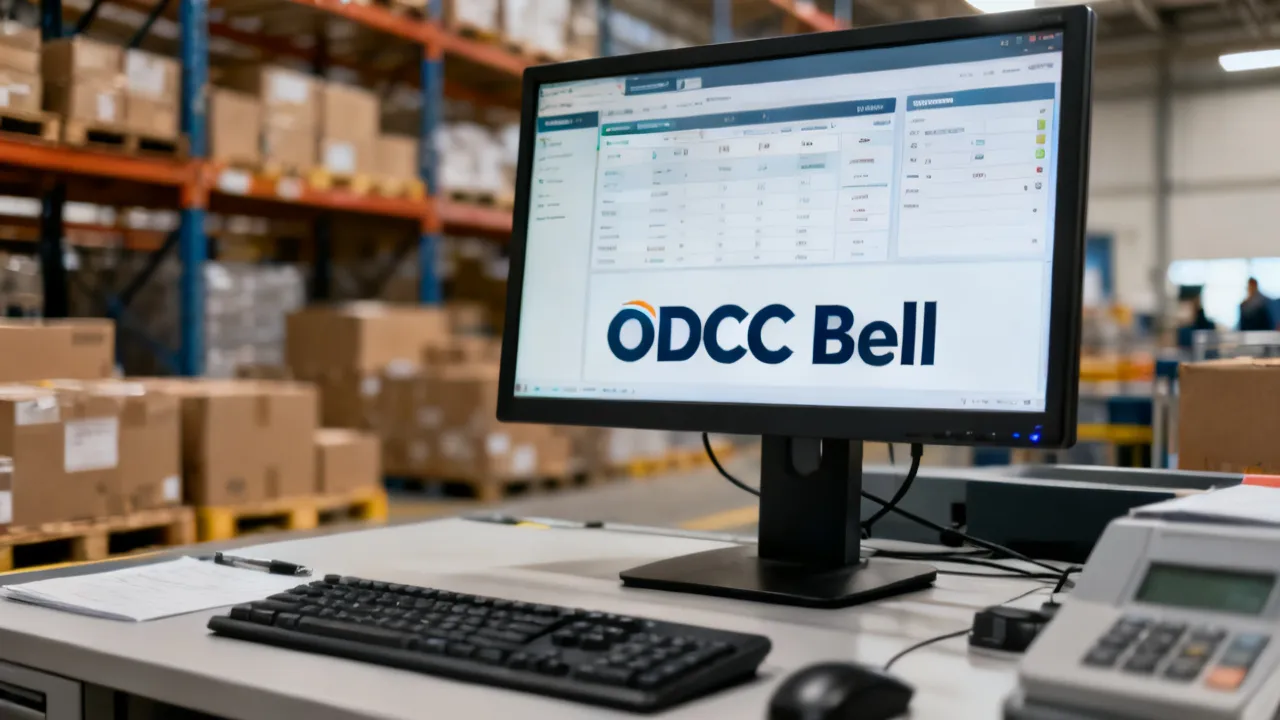
ODCC Bell is commonly discussed as a named operational reference point—often tied to a package of processes, documentation expectations, and decision signals used in supplier-facing workflows. For organizations managing procurement, returns, quality documentation, or dispatch/receiving routines, “ODCC Bell” functions less like a single product and more like an operating standard: it helps align timing, verification steps, and accountability across teams.
From an industry expert perspective, the very important question is not “What is the label?” but “How does the ODCC Bell workflow reduce ambiguity, prevent misses, and create auditable consistency?” That answer typically depends on supplier capability, traceability practices, and the maturity of internal controls—especially when multiple locations or contractors are involved.
In many organizations, the practical meaning of “ODCC Bell” can be summarized as follows: it is a workflow trigger (or set of triggers) that tells stakeholders when certain evidence must be available, when acceptance criteria must be confirmed, and how discrepancies must be handled so that the organization can defend its decisions during audits, disputes, or regulatory reviews. It is not merely a reminder to “do quality checks,” but a structured method that defines what to check, when to check it, who checks it, and what happens next when evidence is incomplete.
In real-world procurement and logistics environments, teams face a recurring challenge: the same task can be interpreted differently depending on who owns it—buyer, receiving clerk, QA lead, or a third-party supplier. ODCC Bell is used to standardize those interpretations. It often embodies expectations around:
When implemented well, the ODCC Bell approach supports predictable outcomes. When implemented loosely, it becomes a “check-the-box” phrase—useful only superficially. The difference between these two outcomes is usually not the name of the workflow; it’s whether the organization has operationalized it with clear inputs, clear outputs, and clear thresholds.
To make that concrete, consider the common scenario where procurement receives a supplier shipment notification. In a low-maturity environment, receiving may accept the shipment based on quantity and basic packaging condition while QA later finds missing documentation. That mismatch creates rework: inventory might need quarantine, the supplier may be asked for documents after the fact, and the organization may struggle to prove when decisions were made. In a mature ODCC Bell environment, the “bell” rings earlier—document readiness is confirmed before physical movement or at the very moment of handoff—so acceptance decisions can be defended.
Operational signals like ODCC Bell are particularly valuable when an organization handles:
While organizations use the term in slightly different ways, the operational logic usually sits within broader cycles such as:
This matters because a single ambiguous handoff can turn into rework costs, delayed shipments, or compliance gaps. “ODCC Bell” is often used to prevent that ambiguity by forcing a disciplined handoff structure. In practice, that may mean:
Even when ODCC Bell is not explicitly named in every internal process document, organizations may still reproduce the same logic through SOPs, checklists, inspection plans, and quality gates. The “bell” is the part that reduces uncertainty at the moment it matters most—during a handoff when people and systems otherwise operate with partial information.
“Price information” associated with ODCC Bell-related supplier decisions is typically not a single fixed number. In procurement practice, costs vary by scope: volume, documentation complexity, lead times, packaging requirements, and audit support. Instead of relying on a universal figure, organizations often evaluate the total cost of ownership (TCO) and risk-weighted cost.
To keep pricing analysis objective, a common evaluation method looks at:
Because you requested supplier details, the practical “supplier check” is less about a single vendor name and more about what the supplier can prove—consistently and in time—against ODCC Bell expectations.
It can help to separate pricing into at least three layers when ODCC Bell is involved:
Organizations that only compare direct procurement cost often learn—sometimes expensively—that the “cheap” option may cost more after you include exception handling and evidence generation. ODCC Bell workflows are designed precisely to limit “operational cost of uncertainty,” but they only do so when evidence is provided in the correct format and within the required timing windows.
When assessing suppliers in the spirit of ODCC Bell, industry teams generally focus on demonstrable evidence. Below are the very relevant due diligence criteria you can use regardless of sector (provided the workflow is documentation- and verification-heavy):
These criteria are aligned with widely used quality and supplier governance concepts found in established quality management practice. For broader context, organizations often reference guidance from recognized frameworks such as ISO-aligned quality management systems and supplier evaluation principles.
However, “readiness” for ODCC Bell is not only about formal policies; it’s about operational performance under realistic conditions. A supplier might claim they can provide traceability, but in practice it may take days to generate a batch trace document or it may use inconsistent identifiers that don’t map cleanly to the receiving system. ODCC Bell readiness assessment should therefore include practical tests.
Practical testing approaches include:
When you evaluate these elements consistently, you can turn ODCC Bell expectations into something measurable rather than subjective.
ODCC Bell workflows are usually fragile when prerequisites are missing. Before adopting or enforcing such an operating standard, organizations commonly establish the following conditions:
If any of these are missing, the ODCC Bell mechanism may still operate informally—but it won’t be reliable enough for governance, continuous improvement, or external audits.
It can be useful to distinguish between prerequisites that are “process prerequisites” and prerequisites that are “system prerequisites.”
Many organizations have strong process documentation but weak system support. For example, they might define evidence requirements but do not build a consistent repository structure for storing evidence. The result is that ODCC Bell becomes dependent on tribal knowledge (“ask Jane, she knows where the files are”) rather than durable governance.
In addition, timing is often the biggest hidden variable. ODCC Bell depends on timing windows: when evidence is due, how long receiving can contain inventory, when QA must act, and how long suppliers have to respond to discrepancies. Without explicit timing rules, stakeholders may drift into inconsistent behaviors that defeat the purpose of standardized governance.
Because your request includes location placeholders, any city/country references would be treated as “nearby.” In practice, “nearby” operations (regional warehouses, distributed receiving points, or locally managed contractors) often face specific integration realities: shared carrier lanes, overlapping shift schedules, and informal knowledge transfer. For ODCC Bell-style workflows, the top mitigation is standardized documentation handling and a consistent escalation routine that works across day/night shifts.
Local logistics habits can also affect turnaround time for clarifications. For instance, teams may prefer phone-first escalation for immediate issues, but they still need written records to maintain audit readiness. That balance—human responsiveness plus structured evidence—is usually where ODCC Bell governance succeeds.
Another localization factor is language and document formatting. Even within the same country, suppliers might submit certificates in different languages or use different naming conventions. ODCC Bell workflows should therefore specify acceptable formats and describe how translation or standardized templates should be handled. If your governance requires certain fields (e.g., batch number, test method, expiration date), the “bell” can ring when those fields are missing—independent of the language used, as long as the evidence can be parsed and validated.
Localization also influences how exceptions are routed. A warehouse in one region may have limited QA coverage during certain shifts, so ODCC Bell might need a defined alternative pathway (e.g., remote QA review). Without a pre-defined alternative, the “bell” may not function under real staffing constraints.
| Approach | How it works in practice | Strengths | Key risks |
|---|---|---|---|
| Documentation-first ODCC Bell | Suppliers submit records before physical movement; QA verifies completeness early. | Fewer surprises at receiving; smoother audits. | May delay shipments if document review capacity is limited. |
| Receiving-first ODCC Bell | Initial physical receipt occurs, then verification happens with a short containment window if needed. | Maintains throughput; useful when shipping schedules are strict. | Higher risk of rework if records are missing or inconsistent. |
| Hybrid ODCC Bell with tiered checks | Low-risk items follow lighter verification; high-risk items follow full ODCC Bell checks. | Better balance of cost and control; scalable governance. | Requires solid risk classification criteria to avoid gaps. |
| Supplier maturity ODCC Bell | Suppliers with proven stability follow streamlined routines; new suppliers follow stricter steps. | Reduces friction for reliable partners. | Over-trusting early performance can backfire without periodic reassessment. |
Choosing among these approaches is not purely a matter of preference; it’s a function of your risk profile and your operational constraints. Documentation-first can be excellent for compliance but challenging for speed. Receiving-first can preserve throughput but must be paired with robust containment rules and rapid evidence escalation. Hybrid and maturity-based approaches can work well when you have reliable data and effective governance to prevent misclassification.
Below is a practical, step-by-step approach that procurement and operations leaders commonly use to deploy or audit an ODCC Bell-style process. It is written to be implementation-neutral; you can adapt it to your internal tools and document systems.
Responsible ODCC Bell deployment also requires that the organization define the “non-negotiables” up front. For example, you might treat certain evidence elements (like batch numbers or calibration status) as mandatory fields that can’t be waived under any circumstances. Other elements might be “recommended” or “context-dependent.” The point is that ODCC Bell should not become a negotiation every time an issue arises; governance improves when mandatory requirements are explicit.
Verification sequencing is often described simply (“check documents before release”), but in practice it requires a logic model that defines the order of validation steps. A robust sequence usually starts with identity and traceability, then moves to spec compliance, and finally checks documentation completeness and signature/approval status.
A typical sequencing rationale might look like this:
When sequencing is unclear, teams often waste effort verifying evidence that cannot be trusted because identity mapping failed. ODCC Bell reduces that waste by defining the order of operations and the decision points where you branch into acceptance versus exception handling.
Many ODCC Bell implementations fail not because of missing checklists, but because exception handling rules are vague. When evidence is missing, teams need to know:
Good exception handling design turns ODCC Bell into a system that both prevents misses and enables rapid recovery when misses occur. Without it, exceptions become “ad hoc,” and audit evidence becomes fragmented across tickets, emails, and spreadsheets.
A practical and defensible exception handling structure often includes:
In mature governance, exception records include not just the final disposition but also the rationale (why that disposition was selected). This is crucial during disputes, internal reviews, and regulatory investigations.
Beyond this checklist, many organizations add two extra “foundation” requirements that are often overlooked:
“ODCC Bell” is typically used as an operational reference to standardize a defined workflow—often involving documentation readiness, verification sequencing, and escalation triggers. The exact meaning can vary by organization, but the common purpose is to reduce ambiguity and support consistent, auditable outcomes.
In practice, ODCC Bell is best understood as a governance mechanism: it establishes predictable decision-making and evidence capture at the moments where the organization is most vulnerable to errors—during supplier handoffs, receiving releases, and quality sign-offs.
Rather than searching for a single universal price, evaluate total cost considerations: unit pricing plus documentation effort, inspection burden, rework likelihood, lead time reliability, and time-to-resolution for exceptions. This is more objective than comparing only the headline cost.
A practical approach is to build a cost model that includes “expected exceptions,” using historical discrepancy rates and time-to-resolve data. Even simple models can help procurement avoid the trap of selecting vendors based only on sticker price.
Key supplier details include traceability capability, documentation control and revision management, quality management maturity, escalation responsiveness, and historical conformance stability. These are “evidence-based” indicators that reduce the chance of operational surprises.
It can also help to ask suppliers how they would handle specific hypothetical failures—e.g., “What if a certificate revision is incorrect?” or “What if a batch identifier does not match the packing list?” Suppliers that have repeatable recovery methods typically reduce ODCC Bell disruption.
In very organizations, an ODCC Bell-style workflow complements broader quality management practices. It acts as a structured operating routine for specific handoffs and verification points, rather than substituting for enterprise-wide quality governance.
In other words, ODCC Bell is usually a layer of operational control. It fits within a larger system that may include ISO-aligned processes, corrective action programs, training requirements, and internal audit schedules.
Supplier instructions should clearly state submission timelines, required document types, acceptable formats, lot/identifier mapping rules, acceptance criteria, and what constitutes a discrepancy. The goal is to define “complete and correct” so that receiving and QA can verify efficiently.
To prevent misunderstanding, many organizations also specify examples of acceptable and unacceptable evidence packaging. When suppliers receive real examples, ODCC Bell requirements become less abstract and less likely to be misinterpreted.
Use risk-based verification tiers, require evidence that demonstrates traceability, review exceptions to refine thresholds, and periodically audit a sample of transactions. Also ensure the escalation process is used in practice, not only documented.
One indicator that ODCC Bell has become a checkbox is when exceptions are recorded but do not change behavior. For example, if the same documentation gaps reoccur month after month and nothing is changed in supplier training, requirement clarity, or system constraints, the workflow is not learning. ODCC Bell should support continuous improvement, not just compliance paperwork.
Many ODCC Bell-style requirements overlap with widely used quality management principles such as process control, traceability, corrective action discipline, and audit readiness. While “ODCC Bell” itself may be organization-specific, these underpinning concepts are consistent with established quality governance approaches.
Even when a named workflow is internal, many of the mechanics—document control, traceability, verification planning, nonconformance management—are consistent with recognized quality management frameworks. That helps organizations map ODCC Bell outputs into audit evidence that auditors recognize.
Track documentation completeness, first-time acceptance/conformance rates, number of rework events, discrepancy counts, and time-to-resolution for exceptions. Use trend analysis rather than single snapshots to avoid misleading interpretations.
To make metrics meaningful, organizations often define a baseline period (e.g., three months prior to ODCC Bell rollout) and then measure changes over comparable time windows. That helps isolate improvements due to ODCC Bell rather than seasonality or supplier changes.
Begin with scope definition and evidence requirements, then run a short pilot with a small set of representative suppliers. Validate the handoff timing and escalation rules before scaling. Speed without clarity usually increases rework, which defeats the purpose of standardized governance.
“Fast safe” usually means selecting a pilot group where:
That approach reduces the chance that the pilot becomes a burden rather than a learning cycle.
Because pricing and operational definitions can differ across industries, this guide avoids unverified claims and does not rely on exaggerated performance figures. For broader background on supplier quality governance and auditability principles, organizations typically consult established quality management resources and standards (e.g., ISO-aligned quality management practices) and procurement risk guidance published by recognized industry bodies.
In practice, the reliability of an ODCC Bell workflow comes from how consistently it is applied and how well it is supported by evidence capture and retrieval systems. External standards help define the backbone; internal procedures make it operational.
Ultimately, ODCC Bell is top understood as a maturity lever for operations—an approach that ties documentation, verification, and escalation into a coherent system. When organizations treat it as a living workflow (supported by clear requirements, supplier evidence, and measurable outcomes), it becomes a practical tool for reducing uncertainty and improving reliability across procurement and logistics cycles.
To get the full value of ODCC Bell, organizations should view it not only as a method of preventing defects but also as a mechanism of building trust: trust between suppliers and buyers, trust between receiving and QA, and trust between operations and governance teams. That trust is earned through consistent evidence, consistent decision-making, and consistent closure of exceptions.
When ODCC Bell is mature, it changes the culture of operations. Teams spend less time chasing missing files and more time resolving meaningful issues. Suppliers invest effort into predictable documentation practices rather than reactive firefighting. Governance teams are better prepared because evidence is complete and retrievable. All of these outcomes trace back to the same root idea: an operational “bell” that signals when actions must happen, evidence must exist, and decisions must be defendable.
Striking the Perfect Balance: Navigating Premiums and Out-of-Pocket Expenses in Senior Insurance Plans

Explore the Tranquil Bliss of Idyllic Rural Retreats

How to Make Lasting Memories at Disneyland Attractions

Affordable Phones and Plans for Seniors

Affordable Full Mouth Dental Implants Near You

Unlock the Top Kept Secrets to Finding Your Ideal Dentist for Flawless Dental Implant Results!

Discovering Springdale Estates

Unveiling RS Sul Telecom Services

The Guide to Car Trading

Striking the Perfect Balance: Navigating Premiums and Out-of-Pocket Expenses in Senior Insurance Plans
Finding an optimal mix of insurance premiums and direct medical costs is crucial for effective healthcare budgeting. This discussion will delve into tactics to achieve a balance that aligns with your finances.
Unlock the Top Kept Secrets to Finding Your Ideal Dentist for Flawless Dental Implant Results!
Selecting an adept dentist is critical for ensuring the efficacy and your satisfaction during a dental implant procedure. This in-depth guide is designed to assist you in finding a dental expert who meets your personal requirements, guaranteeing that your path to dental implant success is seamless and fruitful.

Protect Your Perfect Smile: Master the Art of Defending Your Teeth Against Acid Attacks
Though they may tantalize the palate and invigorate the senses, foods and drinks with high acid content are a double-edged sword with regard to oral wellness. Continual exposure to these substances progressively strips away the protective enamel from our teeth, which can lead to increased sensitivity, changes in coloration, and a variety of other dental complications. This composition offers insight into relishing these zesty favorites while safeguarding your teeth from damage.

Discovering Heartis Eagle Mountain
Heartis Eagle Mountain is a prominent senior living community that offers a range of services and amenities aimed at enhancing the quality of life for its residents. Situated in a peaceful setting, it combines exceptional care with engaging activities, providing a holistic environment that caters to seniors' physical, emotional, and social needs.

Unveiling the Top Dental Implant Options for Seniors: Transform Your Smile with the Ultimate Guide to Restored Radiance
The significance of oral health cannot be understated for the elderly population as they are commonly afflicted with tooth loss due to a multitude of factors, including decay and gum disease. Dental implants have risen to prominence as a prime method of teeth replacement, acclaimed for their long-lasting nature, functional prowess, and striking similarity to our own teeth. This discussion delves deeply into the realm of dental implants to demonstrate why they are considered the optimal choice for aged individuals aiming to enhance their smiles and overall life quality.

Boost Your Defenses: 20 Proven Strategies for a Stronger Immune System
Having a robust immune system is essential to protect our bodies from harmful microorganisms and preserve our general health. Although some elements that affect our immunity are out of our hands, many lifestyle decisions can help us enhance our immune defenses naturally. This piece delves into 20 practical methods to empower your immune system, increasing your capacity to ward off diseases and sicknesses.
