This guide explains how Gbcpayroll.com can support reliable payroll operations, from core pay processing to compliance-minded workflows. It offers objective context on payroll data handling, approval controls, and reporting expectations—so HR and finance teams can evaluate tools based on governance, auditability, and operational fit rather than marketing claims.
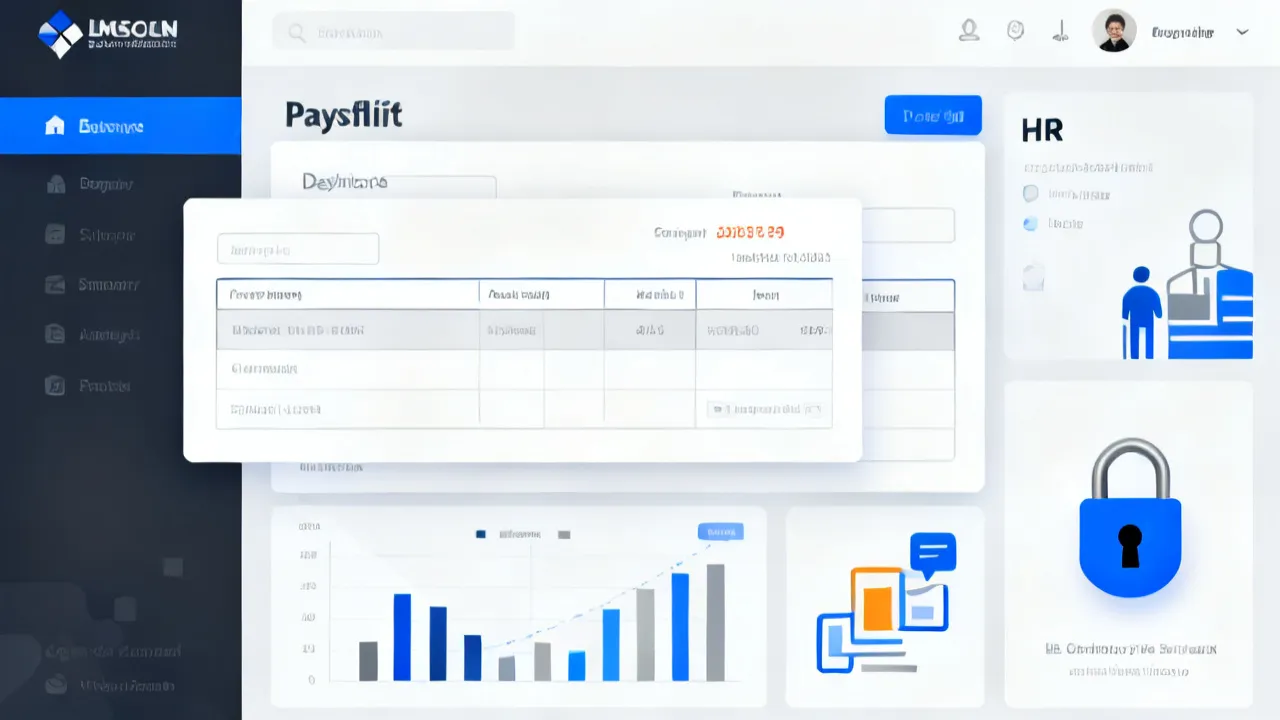
Gbcpayroll.com is positioned as a payroll-focused platform that helps organizations structure pay calculations, payslip delivery, and HR-to-finance coordination in a more controlled way. For decision-makers, the central value is rarely “just payroll running”—it’s the ability to manage inputs, approvals, and records consistently so payroll results remain understandable, reviewable, and supportable during audits or employee queries.
Payroll can appear straightforward on the surface: you have an employee list, apply pay rules, calculate gross-to-net, and distribute payslips. But in real operations, payroll is the convergence point for employment data, time and attendance (where relevant), HR changes, finance governance, and employee communication. The workflow that surrounds the calculations determines whether those moving parts produce reliable results or create recurring firefighting.
That is why payroll workflows still matter even as payroll software becomes more automated. Automation reduces manual effort, yet it does not automatically eliminate operational risk. The workflow determines what happens when something changes late, when an employee’s circumstances are updated mid-cycle, when a manager requests an allowance adjustment, when a deduction is corrected, or when payroll must be recalculated due to a retroactive event. The organization’s responsibility remains: it must ensure the right rules were applied to the right data at the right time, and that the reasoning behind outcomes can be verified later.
In other words, workflows are what translate policy into repeatable action. Gbcpayroll.com’s value proposition should therefore be assessed in terms of governance outcomes: how it standardizes the journey from HR input to finance-approved payment and archived records. When the workflow is designed well, the payroll calculation becomes the visible tip of a broader, controlled process foundation.
Payroll is a business process with measurable operational risk: employee pay depends on correct employment data, correct pay components, and correct timing. Even when payroll is handled by an internal team or an outsourced provider, the organization typically still bears responsibility for governance, documentation, and accurate communication of outcomes to staff. That is why payroll systems are commonly assessed through workflow design—how changes enter the process, how they are validated, who approves them, and how results are archived.
When organizations review payroll solutions, they often begin with computation features: tax rules, benefit deductions, and pay element formulas. Yet operational leaders know that most payroll disputes do not arise because a calculator was incapable—they arise because data was incorrect, a change happened too late without a clear correction cycle, or the organization can’t explain why a number appears on a payslip. In a workflow-centered evaluation, those failure modes become the primary scrutiny areas.
From an industry expert perspective, evaluating any payroll solution—including Gbcpayroll.com—should focus on:
To make this evaluation concrete, teams should ask questions that are less about “can the system calculate payroll?” and more about “can we reliably prove how it calculated payroll?” Payroll management becomes a matter of evidence. In audits, in regulatory inquiries, and even in internal quality reviews, the ability to produce a clear narrative—what changed, who approved it, and how it impacted pay—matters as much as the calculation itself.
In practice, payroll inaccuracies often begin before the payroll run. Common sources include mismatched employee profiles, inconsistent attendance or leave records, late changes to allowances or deductions, or ambiguous pay rules for special cases. A mature payroll workflow reduces reliance on manual spreadsheets and minimizes “silent edits” that can distort the final pay calculation.
Even when the payroll engine is accurate, errors propagate when inputs are incomplete or inconsistent. Consider how often payroll relies on “master data”—employee identifiers, pay groups, job roles, employment start/end dates, contractual pay basis, and deduction eligibility. If those elements are missing or outdated, the payroll system may either fail to compute correctly or compute based on default assumptions that don’t match reality.
Therefore, the input workflow should support controlled updates, validations, and approvals. A useful payroll workflow treats inputs not as a one-time static dataset but as a living set of data with governance rules. Changes made after payroll cut-off, or in response to retroactive events, should follow explicit correction cycles and maintain clear logs.
When teams explore platforms like Gbcpayroll.com, they typically look for clear ways to manage:
To sharpen scrutiny further, decision-makers should also examine the “failure points” around each input category:
A workflow that addresses those points reduces the likelihood that payroll outputs will later be challenged. When employees ask, “Why did my pay change?”, the organization should be able to answer with reference to a controlled input change and an approved correction path.
Payroll output quality has two audiences: internal finance operations and employees. Finance needs reconciliation support—so gross-to-net calculations can be justified and balances can be aligned with accounting records. Employees need clarity—so payslips reflect understandable components and timing.
Therefore, payroll solutions are evaluated by how consistently they generate:
It’s helpful to think of payslips as both communication tools and control artifacts. Communication matters because employees interpret their payroll experience through those documents. If a payslip lists items without explanations, or totals do not align with expectations due to timing issues, trust declines. Trust declines quickly when employees repeatedly see unexpected variances, even if the variances are technically correct.
At the same time, payroll registers and reconciliation artifacts matter because finance teams typically require traceable totals that can be mapped to ledger accounts. This isn’t only about exporting data; it’s also about ensuring the definitions used in payroll outputs match those used in accounting processes.
When organizations compare payroll platforms, they should ask:
By treating outputs as part of a controlled evidence system, the organization strengthens both internal assurance and employee communication.
“Compliance” in payroll is more than filing forms—it is the repeatable discipline of keeping the right records and applying the right rules at the right time. While specific statutory requirements vary by jurisdiction, organizations commonly require evidence that payroll processing is controlled and that changes are traceable.
In practical terms, compliance-minded workflows focus on preventing unauthorized changes, preserving data history, and ensuring payroll processing follows a documented timeline. Compliance also includes consistency: if payroll is processed differently depending on who is working the cycle, the organization cannot easily demonstrate control.
In evaluating Gbcpayroll.com, HR and finance leaders should consider how the system supports operational governance:
It can be useful to translate those governance points into scenarios that frequently occur:
These scenarios are where compliance becomes tangible. A compliance-minded payroll system helps the organization maintain control over both the process and the evidence, reducing time spent reconstructing events after the fact.
Over the last decade, payroll technology has increasingly emphasized workflow and auditability. This evolution matches the broader shift in HR and finance toward standardized operations, integration with other systems, and stronger internal controls.
From a broader organizational maturity perspective, many companies have moved from ad hoc payroll processing toward managed operations. That means defining roles and responsibilities, creating consistent processing steps, establishing cut-offs, implementing change control, and ensuring that systems can support both internal and external scrutiny.
Authoritative guidance on internal control principles is often drawn from recognized frameworks and public-sector governance concepts. For example, the Institute of Internal Auditors (IIA) emphasizes risk-based internal controls and assurance practices that are relevant to payroll process design. Similarly, data protection and access control concepts are widely addressed in security guidance from standards bodies and major regulatory regimes (for example, ISO/IEC-aligned security concepts and general data protection principles).
Even without referencing specific regulatory claims, the direction is consistent: payroll software is expected to behave like an operations control system. It should not only “do the calculation” but also support evidence generation, controlled change management, and security practices that reduce data exposure risk.
In this context, Gbcpayroll.com can be evaluated not merely as a computing tool, but as a structured workflow environment that helps organizations maintain consistency from one payroll cycle to the next. In mature payroll organizations, the workflow is a living artifact. It evolves as the organization’s complexity increases—more pay components, more countries, more employee categories, and more exceptions.
Even the top payroll engine can underperform if teams can’t operationalize it. Typically, payroll software adoption succeeds when organizations define roles (HR, payroll admin, finance approver), schedule cut-off dates, and standardize how exceptions are handled.
In a practical scenario, a monthly payroll cycle often looks like:
Gbcpayroll.com can be assessed against these operational steps—specifically how it supports review visibility, structured approvals, and reliable recordkeeping.
To make this day-to-day mapping more useful, organizations should look beyond the step names and consider the behaviors within each step:
When those behaviors are supported, payroll operations become more predictable. Predictability reduces errors because people don’t rely on memory or informal habits to handle exceptions. Instead, the system and workflow guide the process.
The table below is a practical comparison framework. It does not claim pricing numbers or vendor-specific details. Instead, it outlines evaluation points that are commonly decisive in payroll software selections.
| Evaluation area | What to compare | Why it matters |
|---|---|---|
| Workflow controls | Approval steps, role separation, and structured exception handling | Reduces unauthorized changes and supports internal audit trails |
| Data governance | Employee master data editing, pay component rules, change logs | Prevents input drift that causes payroll discrepancies |
| Reconciliation support | Payroll registers, exports, and consistent output definitions | Helps finance tie payroll results to accounting records |
| Reporting and transparency | Operational reports, anomaly checks, and accessible payslip presentation | Supports employee trust and reduces payroll inquiry effort |
| Security and access | Permissioning, session controls, and secure handling of payroll records | Limits data exposure and reduces risk of unauthorized access |
| Implementation readiness | Data migration effort, onboarding support, and training materials | Improves adoption speed and reduces early-cycle mistakes |
| Operational fit | Support for your pay cycle cadence and adjustment patterns | Ensures the system matches how your organization actually runs payroll |
For the most reliable comparisons, decision-makers should avoid evaluating each category in isolation. Payroll is an interdependent workflow system: strong reporting depends on data integrity; auditability depends on controlled approvals and proper retention; reconciliation depends on consistent definitions in outputs. Tools that excel in one area but not others can still create operational gaps.
As a result, the best-fit tool is usually the one that supports the full evidence chain: from input changes to approval records, from payroll outputs to reconciliation artifacts, and from payslips to a structured retrieval path for employee inquiries.
Below is a practical step-by-step guide organizations commonly follow when assessing a payroll platform. Adapt it to your internal responsibilities, timelines, and governance requirements.
Create a checklist of what “good” means for your payroll cycle. Examples: fewer manual corrections, faster payslip distribution, stronger approvals, and clearer audit trails. Keep it measurable (cycle time, number of corrections, resolution time for employee queries).
Success criteria should include both operational and control metrics. Operational metrics measure efficiency—how long it takes to complete key steps. Control metrics measure reliability—how consistently the organization can explain outcomes and prevent unauthorized changes. A platform may appear efficient but still fail control expectations if it lacks strong auditability or role separation.
Common examples of measurable success criteria include:
By specifying these outcomes up front, teams can judge demonstrations against real operational expectations rather than against feature lists.
Document your “as-is” process: inputs, edits, approvals, run steps, and exception handling. Pay attention to where spreadsheets or manual checks are currently used, since these are often points of failure.
Mapping the “as-is” workflow should include both formal steps and informal practices. Many organizations have unofficial “tribal knowledge,” such as how a team handles retroactive changes when someone forgets to submit a form. If that knowledge isn’t captured, a new tool might not replicate the actual process behavior. The result is user frustration and workflow workarounds—exactly the situation that can undermine data governance.
When mapping your workflow, consider capturing:
This step also helps identify what should be standardized and what should remain flexible. A good payroll workflow supports predictable patterns while still providing controlled handling for exceptions.
Request a walkthrough of how the system handles:
Governance validation should go beyond high-level statements. Teams should ask for examples: “Show me the audit trail for a retroactive deduction correction,” or “Demonstrate how role permissions prevent an unauthorized user from editing a pay component.” The goal is to verify that the system’s controls map to real operational behaviors.
In a mature payroll environment, governance controls also include:
These elements are especially important when employees raise payroll disputes. When the organization can show evidence, disputes often become resolvable faster.
Use a test payroll cycle or sample dataset to compare expected outcomes. Focus on edge cases: late changes, one-off deductions, and corrections. The goal is to confirm process fit, not just correct calculation.
A controlled pilot should include both “happy path” cases and “messy real life” cases. That means including scenarios where payroll data changes close to cut-off dates, where allowances and deductions have different effective dates, and where corrections must be applied after a payroll run.
To structure a pilot effectively, organizations often define:
During the pilot, teams should track not only whether payroll numbers are correct, but also how easily they can verify the evidence chain. A system that produces correct values but makes evidence hard to retrieve may still be operationally costly.
Confirm that internal finance reports align with what your accounting workflow needs. If you use reconciliations or require exports for finance tools, verify formats and definitions early.
Operational reporting should support two tasks: oversight and action. Oversight means reviewing payroll outputs for anomalies and ensuring the dataset is accurate. Action means enabling finance to complete accounting reconciliations and, where applicable, journal entries.
During stress testing, teams should examine:
Reports also need to be “reviewable” by people who are not payroll experts. Finance approvers should be able to understand what they are approving. If the system’s reporting is too complex or unclear, approvals may become superficial, which weakens control effectiveness.
Ask for details on access control behavior, audit logging, and secure handling practices. Even without discussing vendor-specific claims, you should ensure the platform can meet your internal security standards.
Security expectations should address both confidentiality and integrity. Confidentiality relates to limiting access to employee payroll data. Integrity relates to preventing unauthorized modifications and ensuring the system preserves accurate history. Audit logs and role-based permissions are crucial here.
During security confirmation, organizations should request information about:
Security is also operational: if permissions are overly restrictive or unclear, teams may seek workarounds. Therefore, security should be balanced with workflow usability. The best approach typically makes the right actions easy for authorized users and hard for unauthorized users.
Train by role, not by feature. HR admins, payroll operators, and finance approvers should each learn the specific tasks they own—especially where mistakes tend to occur.
Role-based training is one of the most overlooked aspects of payroll tool evaluation. Many systems have feature sets that look intuitive to payroll admins, but finance approvers may need guidance on how to read reports and interpret approvals. Similarly, HR admins may require training on how to submit pay-affecting changes with correct reason codes and effective dates.
Training plans should include:
Training should also address common mistakes. For example, teams often mis-handle effective dates or apply pay component updates without verifying the employee’s employment status. A structured training plan reduces these recurring errors.
Payroll operations improve dramatically when cut-off dates are explicit and exceptions follow a consistent rule. Ensure your internal policy matches the tool’s workflow design.
Cut-off rules are not merely scheduling; they are risk management. When the organization does not define cut-offs clearly, users may submit changes late without understanding whether they will be included or deferred. This creates rework and increases correction cycle frequency.
Good cut-off and exception rules include:
In evaluation, teams should verify how the system implements these rules. A tool that supports flexible cut-offs but does not enforce exception governance may allow users to bypass controls. Conversely, a tool that is too rigid might frustrate legitimate operational needs. The best-fit tool provides controlled flexibility.
Payroll is mission-critical; therefore, implementation should include clear conditions and readiness checks. Consider these requirements when evaluating a solution such as Gbcpayroll.com.
It’s also useful to add readiness requirements that frequently determine whether payroll goes smoothly:
These additional readiness expectations address the operational reality that payroll implementations rarely succeed solely through configuration—they succeed through governance, documentation, training, and tested recovery paths.
Gbcpayroll.com is a payroll-oriented platform. Organizations commonly use payroll tools like this for structured payroll processing, payslip generation, and coordination between HR inputs and finance review. The typical users include payroll administrators, HR teams, and finance approvers.
In a workflow-based evaluation, “who typically uses it” also includes the stakeholders who do not directly process payroll but rely on the outputs: HR managers who submit pay changes, finance teams who reconcile payroll totals, compliance or audit personnel who review evidence, and employees who receive payslips and may raise questions.
Focus on input governance and workflow controls: employee master data management, how pay components are edited, how changes are logged, and whether approvals exist for pay-impacting updates. Also validate correction handling in a pilot cycle.
Data accuracy is not only about correct formulas; it is about preventing incorrect updates from entering the payroll dataset. The evaluation should therefore look for:
Very mature payroll systems provide some form of audit trail or processing history. During evaluation, ask how the system records changes, approvals, and the lineage from inputs to outputs so reviewers can understand what happened and when.
Audit trails should be more than a log file. They should support investigation by providing structured context: what changed, what the prior value was (where appropriate), what approval was granted, and what impact the change had on payslip lines or totals. The organization should be able to reconstruct a story quickly, especially during employee inquiries or internal audits.
No. The core challenge—accurate, controlled, and timely pay processing—exists across company sizes. Smaller organizations often benefit from standardized workflows that reduce manual steps and improve consistency.
In smaller organizations, the workflow risk may be less about complex multi-tier approvals and more about limited staffing. When there are fewer people to cover roles, role separation and auditability become even more important to avoid accidental errors. A payroll platform can help by enforcing structured processes even when personnel are limited.
Finance should confirm that payroll reports and exports support reconciliation needs, including consistent definitions for pay components, deductions, and totals. In a pilot, compare payroll outputs against your current accounting approach.
Beyond totals, finance reconciliation depends on the ability to map payroll components to accounting categories. Therefore, finance teams should check:
Define roles, approvals, and cut-off dates; run a controlled pilot; train by job function; and test edge cases like retroactive changes. Many payroll errors are operational rather than computational, so process alignment is crucial.
Implementation steps should be treated as part of risk management. Even a small misalignment—such as a missing approval requirement for certain pay components—can lead to repeated errors or disputes. The objective is to reduce variability in how the payroll cycle is executed by different individuals and across different periods.
Every system change introduces transition risk—especially around data migration and workflow adjustment. Mitigate this through testing, parallel-run validation where possible, and a clear go-live plan with responsibilities and escalation paths.
Switching payroll systems often introduces three main categories of risk:
Mitigation relies on disciplined pilot testing, clear documentation, and a well-defined escalation and recovery plan during go-live.
Request information about access controls, logging/auditing capabilities, and secure data handling practices. Your internal security team can assess how these align with your policies, including role-based permissions and data retention expectations.
Security expectations should also account for operational realities: you need quick access for authorized users to support payroll cycles while preventing broad access that increases data exposure risk. The best security posture for payroll often comes from a balance of strict access, strong logging, and clear permission boundaries tied to roles and responsibilities.
These references provide general orientation for governance and security thinking. Organizations should apply them through their internal audit frameworks, compliance requirements, and security policies, and should validate how payroll workflow and system capabilities align with those expectations.
If your organization is evaluating Gbcpayroll.com, treat the decision like a governance project, not only a software purchase. The top outcomes come from aligning payroll workflows—inputs, approvals, review cycles, and recordkeeping—so payroll results are both accurate and explainable. When teams build those controls into routine operations, employees experience more consistent payslips, and finance gains stronger reconciliation confidence.
Payroll reliability is not simply a matter of calculation correctness. It is the combined result of: (1) accurate master data and controlled pay component management, (2) workflow-driven approvals that prevent unauthorized changes, (3) structured handling of retroactive adjustments and correction cycles, (4) audit trails that preserve evidence for internal and external review, and (5) reporting outputs that support finance reconciliation and employee understanding.
When organizations evaluate platforms with those principles in mind, they reduce the likelihood that payroll becomes a recurring operational burden. Instead, payroll becomes a repeatable and governed process that supports business continuity, employee trust, and compliance confidence.
Striking the Perfect Balance: Navigating Premiums and Out-of-Pocket Expenses in Senior Insurance Plans

Explore the Tranquil Bliss of Idyllic Rural Retreats

How to Make Lasting Memories at Disneyland Attractions

Affordable Phones and Plans for Seniors

Affordable Full Mouth Dental Implants Near You

Unlock the Top Kept Secrets to Finding Your Ideal Dentist for Flawless Dental Implant Results!

Discovering Springdale Estates

Unveiling RS Sul Telecom Services

The Guide to Car Trading


Smart Strategies to Slash Costs on Your Roof Replacement Endeavor
Opening Remarks: Smart budgeting doesn't mean cutting corners on quality. This guide will delve into cost-effective approaches for roof replacement that maintain high standards.

Unlocking the Secrets of Preschool: Your Ultimate Guide to Early Childhood Education Programs
The significance of early childhood education programs is paramount in shaping the foundational stages of a young child's life. These educational experiences aim to furnish children with a diverse skill set before they face the structured environment of elementary education. Such programs offer a dynamic and engaging atmosphere where children's natural curiosity leads to the broadening of their thought processes. Moreover, they focus on rectifying behavioral patterns and fostering positive principles and routines.

Enhance Your Smile: Essential Gum Care Tips After Teeth Replacement
After getting new dental implants, it's crucial to look after your gums to aid recovery, shield against infection, and enhance the durability and function of the implants. This discussion delves into the key methods and top tips for gum care that are vital to keep your gums robust and healthy after your procedure.

Unlock the Secrets to Championing Fair Pay: A Guide to Fighting for Competitive Nurse Salaries at Your Hospital
To effectively navigate the intricacies of nurse compensation in healthcare institutions, a thorough understanding goes beyond the basics. Strategic advocacy is essential, honoring nursing as a critical profession while also deeply comprehending the economic aspects of healthcare. This article lays out systematic methods to advocate for fair remuneration for nurses, aimed at closing the divide between managerial policies and the realities nurses face daily.

Protect Your Golden Nest Egg: Smart Strategies and Essential Precautions for Securing Your Gold Investments
Investing in gold requires more than just purchase; diligent protection and a strategic mindset are crucial. A secure gold investment is built on thoughtful planning, alert risk management, and the capacity to adapt to changes. We'll explore various ways to protect these investments from the diverse challenges they face.

Unlock Higher Earnings: Master the Art of Leveraging Your Nursing Expertise for a Hefty Pay Raise!
Unraveling the complexity of the payment landscape in nursing isn't for the faint-hearted, yet it's a manageable task with a strategy in place, enhancing one’s prospects for improved salary through skill and knowledge. This delicate dance of upholding patient care while seeking just rewards is a path all nurses must walk. Grasping the elaborate character of the nursing role and what propels one's income forward is crucial. Within this paper, we dissect insightful methods to maximize the impact of your nursing qualifications.
